Understanding BIM Dimensions: From 4D to 7D Applications in Smart Buildings
Explore how BIM technology extends beyond 3D modeling to encompass time scheduling (4D), cost management (5D), sustainability analysis (6D), and facility operations (7D) for smarter building lifecycle management.
Introduction
Building Information Modeling (BIM) has evolved far beyond simple 3D visualization. Today's smart building projects leverage advanced BIM dimensions that integrate time, cost, sustainability, and facility management into a unified digital framework. Understanding these dimensions—commonly referred to as 4D through 7D BIM—is essential for system integrators and facility managers seeking to maximize the value of their digital building investments.
The Evolution of BIM Dimensions
3D BIM: The Foundation
Before exploring advanced dimensions, it's important to understand that 3D BIM serves as the foundation. This dimension encompasses the geometric representation of building components, spatial relationships, and physical attributes. All subsequent dimensions build upon this 3D model.
4D BIM: Time and Scheduling Integration
What is 4D BIM?
4D BIM adds the dimension of time to the 3D model, linking construction schedules directly to building components. This enables project teams to visualize the construction sequence and identify potential conflicts before they occur on-site.
Key Applications
- Construction Sequence Visualization: Animate the building process from foundation to completion
- Schedule Optimization: Identify critical path activities and potential bottlenecks
- Resource Planning: Coordinate labor, equipment, and material deliveries
- Progress Tracking: Compare planned vs. actual construction progress in real-time
Benefits for Smart Building Projects
4D BIM is particularly valuable for smart building projects where IoT infrastructure must be coordinated with traditional construction activities. Sensor placement, cable routing, and system integration points can be scheduled alongside structural and MEP work.
5D BIM: Cost Estimation and Management
What is 5D BIM?
5D BIM integrates cost data with the 3D model and construction schedule, enabling real-time cost estimation and budget tracking throughout the project lifecycle.
Key Applications
- Automated Quantity Takeoffs: Extract material quantities directly from the model
- Cost Estimation: Link unit costs to model elements for instant budget calculations
- Change Impact Analysis: Immediately understand the cost implications of design changes
- Cash Flow Forecasting: Project expenditures based on construction schedule
Smart Building Considerations
For smart building projects, 5D BIM helps track the costs of IoT devices, control systems, and integration services. As sensor specifications change or additional monitoring points are added, cost impacts are immediately visible.
6D BIM: Sustainability and Energy Analysis
What is 6D BIM?
6D BIM focuses on sustainability, incorporating energy analysis, lifecycle assessment, and environmental performance data into the building model.
Key Applications
- Energy Simulation: Model building energy consumption under various scenarios
- Daylight Analysis: Optimize natural lighting to reduce artificial lighting needs
- Carbon Footprint Tracking: Calculate embodied and operational carbon
- LEED/WELL Certification Support: Document sustainability features for certification
Integration with Smart Building Systems
6D BIM creates a powerful feedback loop with smart building systems. Energy models developed during design can be validated against actual performance data from building automation systems, enabling continuous optimization.
7D BIM: Facility Management and Operations
What is 7D BIM?
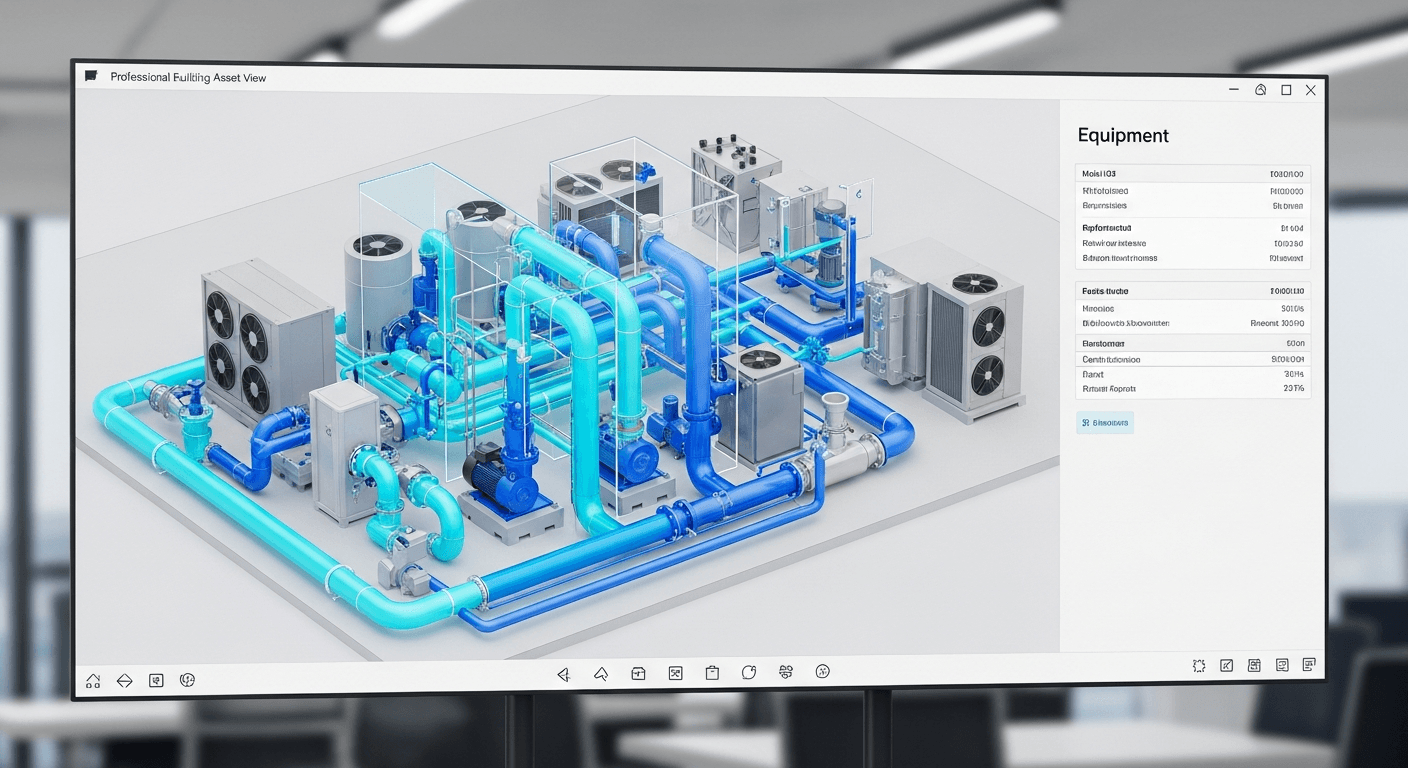
7D BIM extends the model's value into the operational phase, serving as a comprehensive digital twin for facility management, maintenance, and asset lifecycle management.
Key Applications
- Asset Management: Track equipment specifications, warranties, and maintenance history
- Preventive Maintenance: Schedule maintenance based on manufacturer recommendations and actual usage
- Space Management: Monitor occupancy and optimize space utilization
- Emergency Response: Provide first responders with accurate building information
The Connection to Digital Twins
7D BIM naturally evolves into digital twin technology, where the static model becomes a living representation of the building, continuously updated with real-time sensor data and operational information.
Implementing Multi-Dimensional BIM
Getting Started
- Establish Data Standards: Define how information will be structured and exchanged
- Select Compatible Tools: Choose software that supports interoperability across dimensions
- Train Your Team: Invest in training for both technical and management staff
- Start with Pilot Projects: Test workflows on smaller projects before enterprise rollout
Common Challenges
- Data Integration: Connecting BIM with existing enterprise systems
- Model Maintenance: Keeping the model current throughout the building lifecycle
- Skill Gaps: Finding professionals with multi-dimensional BIM expertise
- ROI Justification: Demonstrating value to project stakeholders
The Future of BIM Dimensions
The industry continues to evolve, with emerging concepts like 8D BIM (safety) and beyond. As artificial intelligence and machine learning capabilities mature, BIM models will become increasingly intelligent, automatically identifying issues and suggesting optimizations.
Conclusion
Understanding and implementing BIM dimensions from 4D to 7D transforms how buildings are designed, constructed, and operated. For smart building projects, these advanced dimensions provide the digital foundation necessary to fully leverage IoT sensors, building automation, and predictive analytics. Organizations that master multi-dimensional BIM will be better positioned to deliver buildings that are more efficient, sustainable, and responsive to occupant needs.
The journey from 3D to 7D BIM is not just about adding technology—it's about fundamentally changing how we think about buildings as living, data-rich assets that continue to provide value long after construction is complete.