The Universe Is Real. Metaverse View: Is the Universe Real or Virtual?
Explore the intersection of cosmology and IoT as we investigate the Simulation Hypothesis, the rise of Digital Twins in healthcare, and the philosophical implications of a hyper-connected world.

Is the world around us a fundamental physical reality, or are we living inside a complex, high-fidelity simulation? This question, once reserved for science fiction writers and philosophizing late-night conversations, is now gaining serious traction in technology and physics circles. As we build more advanced immersive environments—the Metaverse—and create precise mirror images of our physical world through Digital Twins, the line between the "real" and the "virtual" is blurring.
This evolution isn't just about gaming or social connection; it has profound implications for how we approach human health, industrial maintenance, and the very nature of existence. By leveraging the Internet of Things (IoT) and Digital Medicine, we are effectively reverse-engineering the complexity of our universe into actionable data. But does this ability to digitize reality imply that reality itself is digital?
From Atoms to Bits: The Simulation Hypothesis
The idea that the universe is a simulation is often called the Simulation Hypothesis. Popularized by philosopher Nick Bostrom, the theory suggests that if a civilization can reach a post-human stage, they would likely have the computing power to run detailed simulations of their ancestors. If this is true, the probability that we are in a base reality is one in billions.
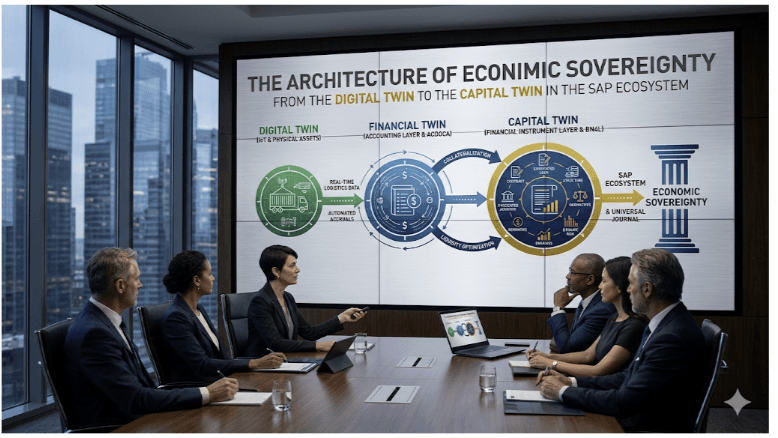
While this sounds like the plot of a movie, it intersects heavily with modern IoT. In our industry, we discuss "digital shadows"—the virtual representation of a physical object. When you have a Digital Twin of a jet engine or a human heart, the virtual version informs the physical one, and vice versa. We are effectively building "mini-universes" governed by the laws of physics and data.
The Role of Quantum Physics
Some physicists point to quantum mechanics as evidence that the universe might be pixelated. The concept of the "Planck length" suggests there is a minimum unit of distance, similar to a pixel on a screen. If the universe is continuous, why is there a minimum resolution?
In the IoT sector, we deal with discretization constantly. We take continuous signals (like sound or temperature) and sample them into digital data. If the universe behaves like a digital system—processing information in discrete steps—it supports the argument that our reality is computed.
Digital Medicine: Where Biology Meets Data
Whether the universe is real or virtual, our biological bodies are undoubtedly physical. However, the maintenance of these bodies is rapidly moving into the virtual realm. This is the domain of Digital Medicine.
Digital medicine goes beyond simply digitizing medical records (going from paper to PDF). It involves the collection, analysis, and application of biometric data to prevent, diagnose, and treat disease. It is the ultimate Digital Twin of the human body.
How IoT Powers Digital Health
The explosion of wearable technology—smartwatches, fitness trackers, and continuous glucose monitors—has created a new layer of connectivity. We are no longer passive observers of our health; we are active participants generating terabytes of data.
- Continuous Monitoring: unlike an annual checkup, IoT devices provide a 24/7 stream of health data.
- Predictive Analytics: AI algorithms analyze this data to predict health events before they happen, such as a hypoglycemic episode or a cardiac arrhythmia.
- Personalized Care: Treatments can be tailored to the individual's specific genetic and metabolic makeup rather than population averages.
Case Study: The Virtual Heart
Consider the "Virtual Heart" project, an initiative where researchers create exact Digital Twins of a patient's heart based on MRI scans and other sensor data. Doctors can simulate surgeries or stress tests on the virtual heart before touching the patient. This reduces risk and improves outcomes. It is a microcosm of the Metaverse concept applied to biology—a "Bodyverse" where the digital dictates the physical.
The Metaverse: A Mirror or a Replacement?
As we transition into the era of the Metaverse, we must define what "real" means. The Metaverse promises a persistent, shared virtual world where users interact via avatars. Critics argue this is an escape from reality, but proponents view it as an evolution of it.
In an industrial context, the "Industrial Metaverse" is already here. It is the convergence of Digital Twins, Augmented Reality (AR), and IoT. Technicians can walk through a factory floor with AR glasses, seeing the operational status of every machine, the temperature of pipes, and the location of inventory, overlaid onto the physical world.
The Blurring of Realities
If you can repair a physical engine by manipulating its virtual twin, or if a doctor can treat a physical heart by simulating a procedure in a digital model, the distinction between "real" action and "virtual" action becomes meaningless. The interface is the key.
This brings us back to the nature of the universe. If our interactions with the world are mediated by data processing—whether through our biological senses or electronic sensors—then the "user interface" of reality is the critical component.
Practical Implications for the IoT Industry
For professionals in the IoT and technology sectors, these philosophical debates translate into concrete strategic requirements.
1. Data Fidelity is the New Reality
If we view the universe as an information processing system, then fidelity is everything. Low-resolution data leads to a "laggy" reality. In healthcare, poor sensor data can lead to incorrect diagnoses. In industrial IoT, it can lead to catastrophic equipment failure. The industry must move toward higher sampling rates and more precise sensors to map the "real" world accurately.
2. Latency Management
In a simulated universe, there is theoretically zero latency between the event and the rendering. In IoT networks, latency is the enemy of real-time interaction. Whether it is remote surgery or autonomous driving, the digital twin must sync with the physical entity in near real-time. Edge computing is becoming essential to process data closer to the source, minimizing the delay between the physical event and the digital reflection.
3. Security of the Digital Soul
If our digital twins are as complex as our physical selves, they become high-value targets. A hack on a digital twin of a power grid is as dangerous as a physical attack. A hack on a patient's digital medical record could be fatal. As we build these comprehensive models, cybersecurity moves from protecting data to protecting lives and reality itself.
The Philosophical Outlook: Stay Real
While we may build virtual worlds and digital twins, the "Universe Is Real." The consequences of our actions in the physical world are permanent. While the Metaverse offers exciting avenues for interaction and Digital Medicine offers life-saving potential, they are tools to enhance the human experience, not replace it.
The danger lies in the "Black Mirror" effect—becoming so obsessed with the digital representation that we neglect the physical substrate. True health and happiness come from a balance. Digital medicine should give us more time to enjoy the physical world by keeping us healthy, not trap us in a loop of anxiety over biometric metrics.
FAQ: Navigating the Intersection of Reality, Tech, and Health
To further clarify these complex topics, here are answers to some frequently asked questions regarding the nature of reality and the role of digital technology in our lives.
1. What is the Simulation Hypothesis? The Simulation Hypothesis is the theory that our current reality is actually a computer simulation, similar to a video game, created by a more advanced civilization. Proponents argue that the computing power required for such a simulation is inevitable for future civilizations, making it statistically likely that we are in one rather than in base reality.
2. How does a Digital Twin differ from a simple 3D model? A 3D model is a static geometric representation. A Digital Twin is dynamic and data-driven. It is connected to real-world sensors, meaning it mimics the state, behavior, and status of the physical object in real-time. If the temperature of a physical engine rises, the Digital Twin reflects that change instantly.
3. Can Digital Medicine replace traditional doctors? No, Digital Medicine is designed to augment doctors, not replace them. It provides tools for continuous monitoring, early diagnosis, and data-driven treatment plans. While AI can identify patterns, the nuance of human care and ethical decision-making still requires a human professional.
4. Is the Metaverse just for gaming? While gaming is a major driver, the "Industrial Metaverse" is the more significant enterprise application. It involves using AR and VR to train surgeons, design factories, or visualize complex data sets. It is a spatial interface for data that allows humans to process information more naturally.
5. Why does the distinction between real and virtual matter for IoT security? As "Digital Twins" gain the ability to control physical assets (like closing a valve or starting a car), the attack surface expands. A purely virtual attack (hacking a software model) can now have real-world physical consequences (shutting down a power plant). This requires security standards more akin to physical infrastructure than traditional IT.
6. How does IoT help us stay healthy? IoT devices enable "continuous care." Instead of a snapshot of health at a doctor's visit, IoT provides a movie. It tracks sleep, heart rate variability, glucose levels, and activity. This allows for early detection of anomalies and lifestyle adjustments that prevent chronic diseases from developing.
7. What is the "Planck Length" and why is it mentioned in this debate? The Planck length is the smallest possible unit of length in physics. If the universe is continuous, there should be no smallest unit. However, the existence of a "pixel" size for the universe suggests that space-time might be discrete, similar to a digital grid, which lends credence to the simulation argument.
Conclusion: Embracing the Hybrid Future
Ultimately, whether the universe is a simulation or a physical entity may be a question we cannot answer. However, the question "Is the Universe Real?" serves as a vital reminder to value our tangible existence.
Digital technology and IoT are not here to detach us from reality but to enhance our understanding of it. Through Digital Medicine, we gain mastery over our biology. Through the Metaverse and Digital Twins, we gain mastery over our environment. The key is to use these tools to build a healthier, more efficient, and more connected physical world.
As we continue to map the universe onto servers and silicon, we must ensure that the source—the physical universe and the people within it—remains the primary beneficiary of this digital transformation.