What Distinguishes High Performance RTLS Solutions from Basic Tracking Tools
In the high-stakes environment of modern logistics and manufacturing, 'approximate' location data is no longer sufficient. This article explores the critical distinctions between basic tracking tools and high-performance Real-Time Location Systems (RTLS), diving into the technologies that drive centimeter-level accuracy and the tangible ROI of eliminating operational ambiguity.

In the complex ecosystem of industrial operations, the gap between success and failure is often measured in millimeters. In a high-speed warehouse or a precision manufacturing plant, “approximate” is a polite word for “useless.”
Consider a scenario: A million-dollar automated guided vehicle (AGV) stalls because a basic tracking system detected a forklift “somewhere nearby.” Or imagine a production line halting because a critical tool cannot be located within a 5,000-square-foot facility. These are not hypothetical inconveniences; they are costly realities that plague facilities relying on outdated tracking methodologies.
As the push toward Industry 4.0 accelerates, the demand for precision has shifted from a luxury to a necessity. Organizations are realizing that knowing the general vicinity of an asset is not enough. To achieve true operational excellence, decision-makers are turning away from basic tracking tools and adopting high-performance Real-Time Location Systems (RTLS).
But what exactly separates a high-performance solution from a standard tracking tag? The answer lies not just in the technology under the hood, but in the granularity of data, the speed of updates, and the ability to turn raw coordinates into actionable business intelligence.
The Limitations of “Basic” Tracking
Before defining high-performance RTLS, we must first understand the limitations of the tools many businesses currently employ. Basic tracking tools often rely on simplistic methodologies such as passive RFID identification or barcode scanning. While effective for simple inventory counts, these technologies suffer from significant blind spots in a dynamic environment.
The “Zone” Fallacy
Basic tracking typically operates on a “zone” logic. A reader antenna covers a specific area (e.g., a dock door or a shelf). If a tag passes through, the system notes its presence in that zone. However, once the tag leaves that immediate vicinity, the system effectively loses the asset until it hits the next checkpoint. This creates periods of “digital darkness” where the asset’s status is unknown.
Latency Issues
In a wired world, real-time means instantaneous. In the world of basic tracking, “real-time” can be a misnomer. Many basic systems poll for data at set intervals—every few minutes or hours. In a fast-moving warehouse, a five-minute delay in locating a high-priority pallet can mean missing a shipping cutoff or delaying an entire production run.
Lack of Context
Knowing where something is only half the battle. Basic tools rarely offer context regarding the asset’s orientation, movement history, or interaction with other assets. They provide a static point of data rather than a dynamic stream of behavioral intelligence.
Defining High-Performance RTLS
High-performance RTLS represents a paradigm shift. It is defined by its ability to provide continuous, precise location data—often accurate to within a few centimeters—in real-time. Unlike basic tools that answer the question “Is it here?”, high-performance RTLS answers “Where exactly is it right now, how fast is it moving, and what is it doing?”
This leap in capability is driven by advanced underlying technologies. Let us explore the core pillars that distinguish these elite systems.
1. Advanced Positioning Technologies
High-performance RTLS moves beyond simple signal presence (RSSI) to sophisticated time-based and angle-based measurement techniques.
Ultra-Wideband (UWB): Currently the gold standard for high precision, UWB operates by transmitting extremely short pulses across a wide spectrum of radio frequencies. Because these pulses are so short, they are highly resistant to multipath interference (signal bounce), which plagues other technologies like Wi-Fi or Bluetooth in industrial environments. UWB enables Time of Flight (ToF) calculations, resulting in sub-meter accuracy that allows for the precise tracking of moving assets.
Time Difference of Arrival (TDOA) and Angle of Arrival (AoA): These are advanced algorithms used to calculate location. TDOA measures the time difference of a signal arriving at multiple receivers to trilaterate a position. AoA calculates the angle at which the signal hits the receiver. High-performance systems utilize a blend of these geometries to ensure accuracy even in “cluttered” environments filled with metal racks and machinery.
2. Continuous Visibility vs. Spot Checks
The defining characteristic of a high-performance system is continuity. The tracking is not event-based (scanning a barcode); it is state-based. The system constantly knows the state of the asset.
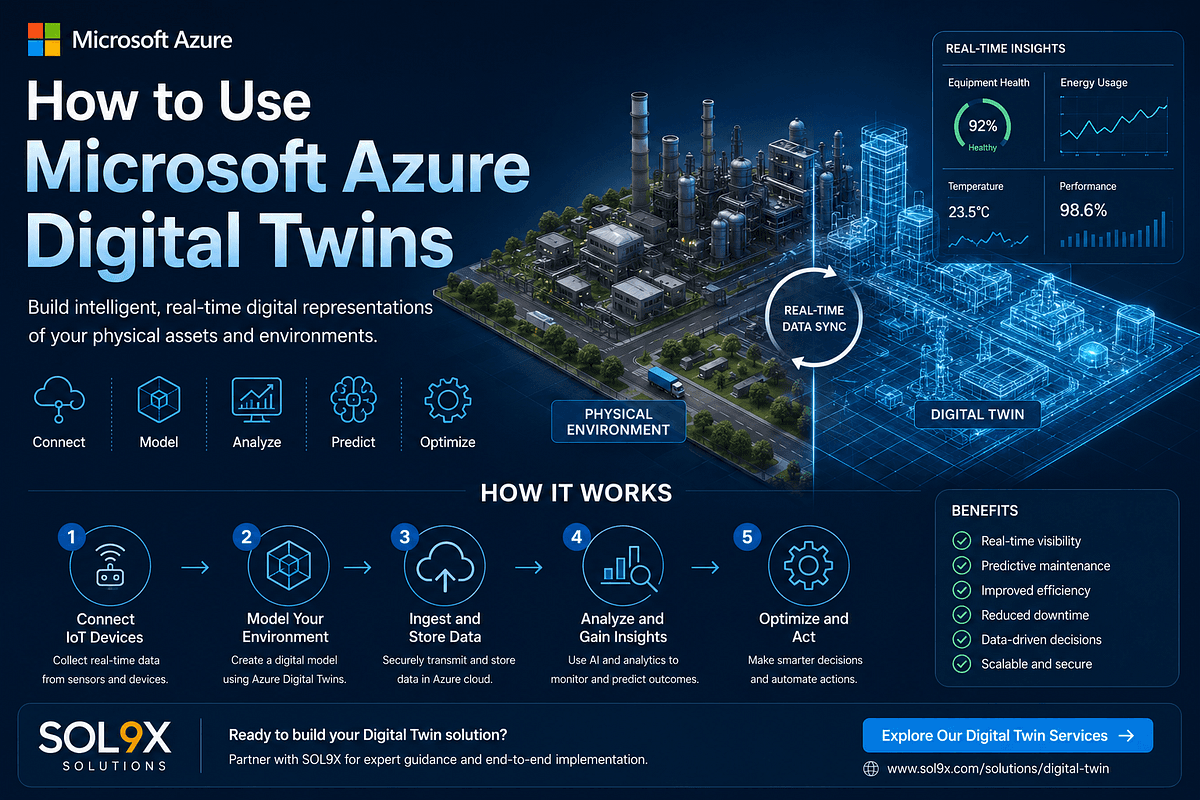
This allows for the creation of "Digital Twins"—virtual replicas of the physical operation. Because the data refreshes continuously (often multiple times per second), the digital twin mirrors the physical reality with near-zero latency. This enables operators to visualize bottlenecks as they form, rather than analyzing them after the shift ends.
3. Sensor Fusion and Edge Computing
A high-performance RTLS does not just track coordinates; it tracks condition. These systems often integrate with environmental sensors (temperature, humidity, vibration) via sensor fusion. By processing this data at the edge (on the device or gateway) rather than sending everything to the cloud, the system can trigger immediate alerts. For example, a high-value vaccine container isn't just tracked; it is monitored, and the system can trigger an alarm the second the temperature deviates, while simultaneously locating the asset for immediate retrieval.
The Business Impact: From Data to ROI
Why does this distinction matter? Why invest in centimeter-level accuracy? The practical implications for the industry are profound, touching on efficiency, safety, and asset utilization.
Enhancing Operational Efficiency
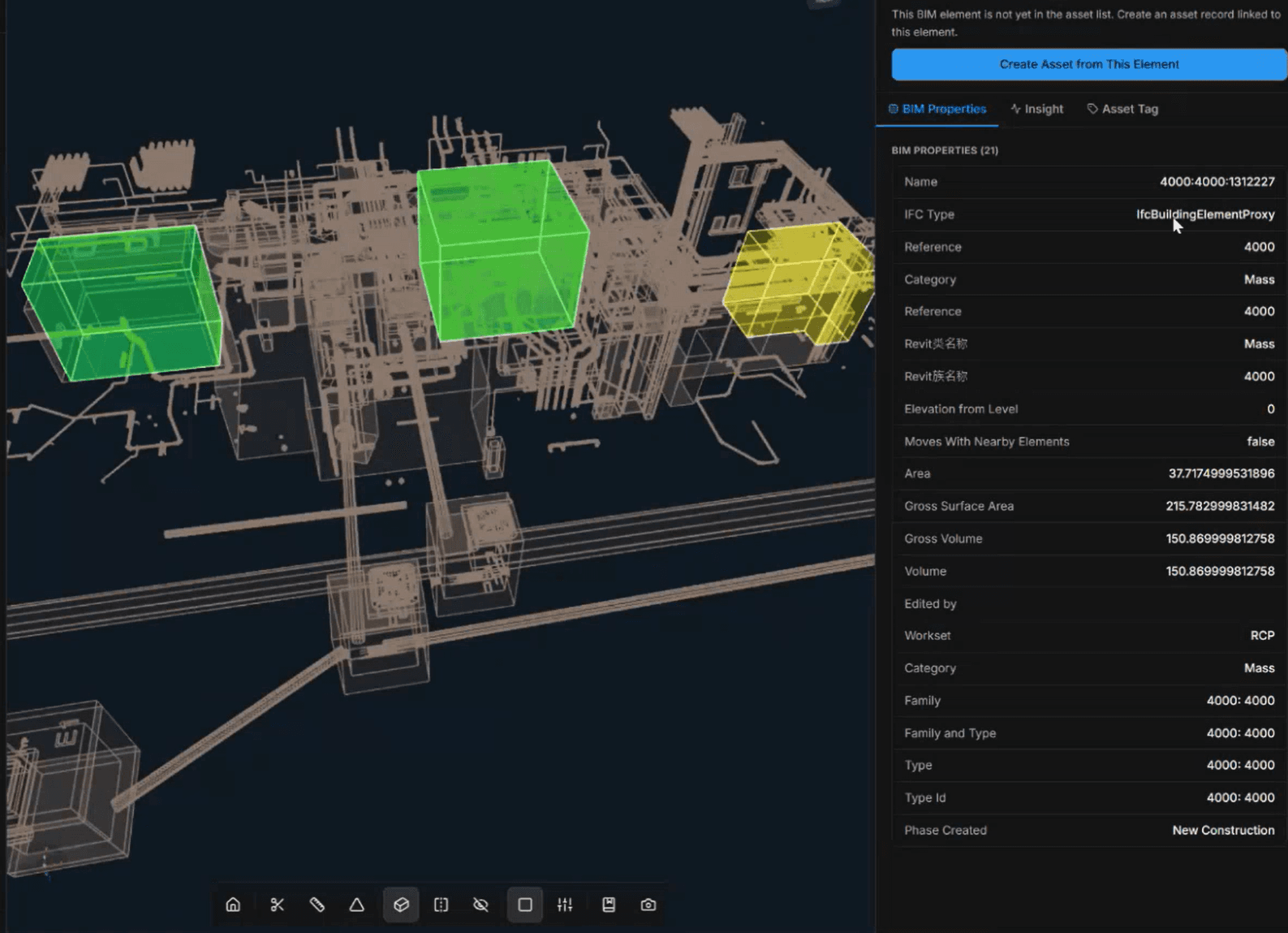
Consider the "searching" economy. In logistics facilities, workers often spend a significant portion of their shift searching for tools, pallets, or forklifts. High-performance RTLS eliminates the search. By overlaying location data onto a facility map, management gains instant visibility into asset flow.
- AGV Safety: High-speed AGVs require precise knowledge of human and object locations to navigate safely. Basic tracking lacks the resolution to distinguish between a person standing safely beside a lane and one stepping into it. High-performance RTLS allows AGVs to slow down or stop instantaneously when an obstruction is detected, preventing collisions and equipment damage.
Optimizing Asset Utilization
In many plants, there is an imbalance between asset demand and availability. Companies often buy more equipment because they cannot find what they already own. With RTLS, utilization rates become visible. Data might show that forklift #3 is idle 60% of the time while forklift #7 is overused. This allows for better fleet management and deferred capital expenditures.
Improving Worker Safety and Workflow
Beyond assets, RTLS tracks personnel. In hazardous environments, knowing the exact location of a worker during an emergency evacuation is critical. Furthermore, analyzing the movement patterns of workers can help optimize floor layouts. If workers are traversing the same path repeatedly to fetch materials, the facility layout can be reorganized to reduce motion waste (one of the seven wastes of Lean manufacturing).
Case Study in Precision: The Automotive Industry
To illustrate the power of this distinction, look at the automotive manufacturing sector. An assembly line operates on a "Just-in-Time" (JIT) or "Just-in-Sequence" (JIS) model. If the wrong seat arrives at the station, or if a specialized welding tool is missing, the line stops. The cost of a stopped line is measured in thousands of dollars per minute.
A basic RFID gate might tell a manager that a pallet of parts entered the building, but it cannot tell them which line it is currently at. A high-performance RTLS, utilizing UWB, can track that pallet through the automation maze, ensuring it arrives at the correct station at the exact moment the chassis arrives. This synchronization is only possible with the granularity and update rates provided by high-performance solutions.
Implementation Challenges and Considerations
Transitioning from basic tools to high-performance RTLS is not without challenges. It requires a robust infrastructure, including the installation of anchors (receivers) and careful planning to avoid signal interference from metal structures.
However, the return on investment (ROI) calculation is shifting. Historically, tracking was justified by inventory control. Today, it is justified by throughput optimization and safety. The cost of the technology is increasingly offset by the cost savings from preventing a single major incident or improving process flow by mere percentage points.
Conclusion
The distinction between high-performance RTLS and basic tracking tools is the difference between guessing and knowing. In an era defined by speed, precision, and automation, “good enough” is a liability. Basic tools provide a snapshot; high-performance RTLS provides a movie.
For organizations looking to scale, the path forward involves adopting technologies that offer not just visibility, but clarity. By investing in high-performance RTLS, businesses transform their facilities from static warehouses into dynamic, intelligent ecosystems where every asset is accounted for, and every movement is optimized.
Frequently Asked Questions (FAQ)
Q1: Can’t I just use standard GPS or Wi-Fi for tracking? Standard GPS is inaccurate indoors and cannot penetrate roofs. Wi-Fi-based tracking is possible but generally lacks the precision (usually within 3-5 meters) and update speed required for high-speed industrial applications. High-performance RTLS typically uses UWB or specialized BLE (Bluetooth Low Energy) for superior accuracy and interference resistance.
Q2: Is high-performance RTLS difficult to install? It is more complex than setting up a barcode scanner. It requires a site survey to determine optimal placement for the infrastructure (anchors/anchors) to ensure line-of-sight and signal integrity. However, modern systems have become significantly easier to deploy and configure compared to earlier generations.
Q3: What is the biggest difference in cost between basic and high-performance systems? Basic systems (like passive RFID) have a very low per-tag cost but high infrastructure costs if you want to cover every inch. High-performance RTLS (like UWB) has a higher per-tag cost and requires a dense infrastructure of sensors, but the total cost of ownership is often lower when factoring in the massive gains in efficiency, the reduced need for manual labor, and the prevention of expensive errors.
Q4: How does multipath interference affect RTLS? Multipath interference occurs when signals bounce off metal walls or racks, creating “ghost” signals that confuse receivers. Basic Wi-Fi and Bluetooth systems are highly susceptible to this. High-performance systems like UWB are designed to ignore these reflected pulses, focusing only on the direct signal for accurate calculation.
Q5: Can RTLS track both assets and people? Yes. A comprehensive RTLS solution can track any object equipped with a tag. This allows for dual-use cases: monitoring expensive equipment for location and maintenance (condition monitoring) and monitoring personnel for safety (man-down detection or mustering in emergencies). Privacy protocols and data governance are strictly adhered to in such implementations.
Q6: What is the update rate for a high-performance RTLS? While basic systems might update every few minutes, high-performance RTLS can update location data multiple times per second. This near-real-time frequency is essential for tracking fast-moving vehicles like forklifts or AGVs and ensuring safety protocols are triggered instantly.
Q7: Will this replace my Warehouse Management System (WMS)? No, RTLS does not replace a WMS or an ERP (Enterprise Resource Planning) system; it enriches them. RTLS feeds granule, real-time location data into the WMS. This gives the WMS a layer of spatial intelligence it previously lacked, allowing for logic like “Pick the item closest to this worker” rather than just “Pick this item.”