Digital Twins Revolutionize Predictive Maintenance in Manufacturing 2026
As the manufacturing sector races toward Industry 5.0, digital twin technology has emerged as the cornerstone of predictive maintenance strategies. By merging IoT sensor data with AI-powered analytics, industry leaders are creating virtual replicas that predict failures before they occur, ensuring unprecedented operational uptime.
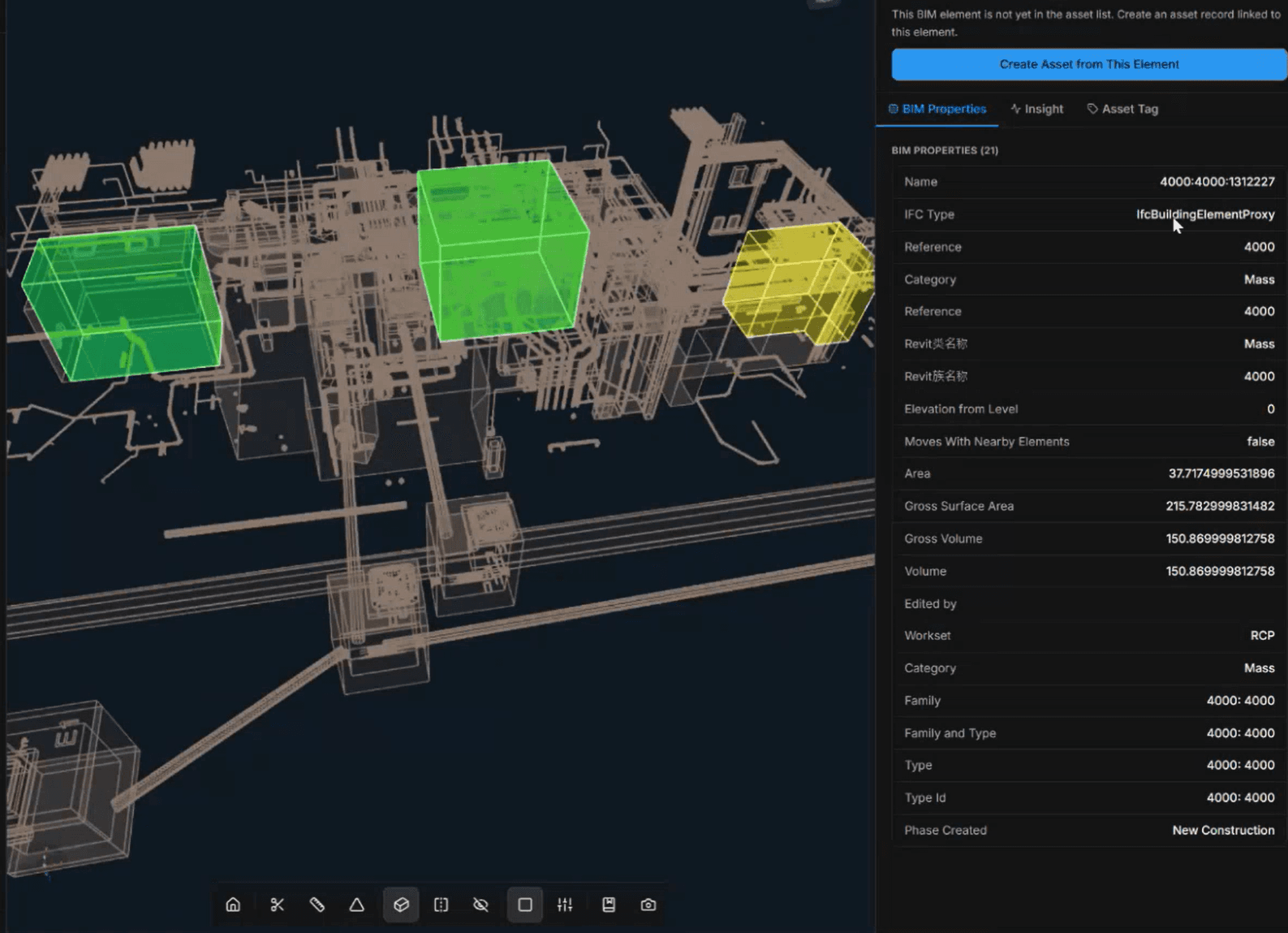
In the high-stakes arena of modern industrial production, the concept of "downtime" has shifted from a minor inconvenience to a existential threat. As supply chains tighten and customer expectations for rapid delivery skyrocket, manufacturers are turning to a transformative solution: the Digital Twin. By 2026, what was once considered a futuristic buzzword has become the operational backbone of the smart factory.
Leading manufacturers are no longer simply reacting to equipment failures; they are anticipating them. Through the sophisticated integration of Internet of Things (IoT) sensors and artificial intelligence (AI), companies are creating exact virtual replicas of their physical assets. These digital twins are not just static 3D models—they are living, breathing simulations that enable real-time monitoring, rigorous predictive maintenance, and deep operational optimization. This comprehensive analysis explores how Industry 4.0 initiatives are leveraging these technologies to redefine the lifecycle of industrial machinery.
The Evolution from Industry 4.0 to Intelligent Maintenance
To understand the current revolution, we must look at the trajectory of Industry 4.0. The initial phase focused on connectivity—simply getting machines to talk to one another. However, as we move deeper into the decade, the focus has shifted from connectivity to cognition.
Digital twins sit at the apex of this evolution. They act as a bridge between the physical and digital worlds, creating a feedback loop where data from the physical asset informs the virtual model, and insights from the model drive action in the real world. In 2026, this technology has matured from a novelty to a necessity. The manufacturers leading the pack are those utilizing these virtual replicas to move away from scheduled maintenance—which often results in unnecessary parts replacement or, worse, missed failures—towards a predictive model based on actual equipment health.
How It Works: The Convergence of IoT and AI
The efficacy of a digital twin relies on a powerful synergy between hardware and software. The process begins at the "edge," where IoT sensors are attached to critical machinery. These sensors—vibrating at microscopic levels to detect imbalance, thermal sensors tracking heat anomalies, and acoustic monitors listening for the slightest pitch change in a motor—act as the nervous system of the asset.
The Data Pipeline
- Data Acquisition: High-frequency sensors stream terabytes of operational data continuously.
- Contextualization: This raw data is ingested into a platform where it is contextualized with historical performance data and environmental conditions.
- Digital Mapping: The data populates the digital twin, updating its state in real-time to mirror the physical asset perfectly.
- AI Simulation: Machine learning algorithms run simulations on the twin, stressing the virtual asset against various loads and conditions to predict when failure is imminent.
By 2026, advancements in Edge AI have allowed much of this processing to happen locally on the factory floor, reducing latency and enabling real-time decision-making without the need for constant cloud connectivity.
The Strategic Value of Predictive Maintenance
The financial implications of shifting to a digital twin-driven maintenance strategy are staggering. The traditional "break-fix" model is expensive and dangerous, while preventive maintenance can be wasteful. Predictive maintenance, powered by digital twins, optimizes the middle ground.
Extending Asset Lifespan
Machinery does not degrade overnight; it fails due to the cumulative effect of微小 (micro) stresses. A digital twin visualizes these cumulative effects. For example, by simulating the thermal stress on a turbine blade, operators can adjust the machine's load profile in real-time to minimize wear, effectively extending the asset's useful life by years.
Eliminating the "False Positive" Dilemma
One of the historical hurdles in maintenance was the false alarm. Traditional vibration analysis might flag a bearing as faulty when it was simply undergoing a heavy load. Digital twins solve this by understanding the context. Because the twin knows the exact load, speed, and temperature of the machine, it can distinguish between a harmless vibration spike and a critical failure sign. This precision ensures that maintenance teams only intervene when absolutely necessary, optimizing labor and spare parts inventory.
Real-World Applications: A 2026 Perspective
While the theory is sound, the application is where the revolution truly lies. In 2026, we are seeing digital twins deployed across diverse sectors of manufacturing, from automotive to pharmaceuticals.
The "What-If" Scenario Modeling
Perhaps the most powerful feature of a mature digital twin is the ability to run "what-if" scenarios. Before a line operator increases the production speed to meet a surge in demand, they can ask the digital twin: Can this equipment handle a 15% increase in speed for the next 48 hours?
The twin analyzes the remaining useful life of components, predicts potential thermal spikes, and gives a probability of failure. If the risk is too high, the operator can defer the order or schedule a brief maintenance pause. This level of operational agility was impossible just a few years ago.
Integration with Augmented Reality (AR)
By 2026, the digital twin is no longer confined to a control room screen. It has overlaid with the physical world through Augmented Reality. When a technician approaches a piece of equipment for repair, they can view the digital twin through AR glasses. The glasses highlight the specific component that needs attention, overlay the torque specifications required for the fix, and even play a simulation of the repair process. This convergence of Digital Twin and AR reduces Mean Time to Repair (MTTR) by as much as 50%.
Overcoming Implementation Barriers
Despite the clear benefits, the path to a fully digital-twin-enabled factory is not without obstacles.
Data Silos and Legacy Systems
Many manufacturers struggle with "brownfield" sites—factories filled with legacy equipment that was not built to be smart. In 2026, however, the cost of retrofitting has dropped significantly. Non-invasive sensors and wireless gateways now allow even 30-year-old machines to feed data into a digital twin ecosystem.
The Skills Gap
Creating a digital twin requires data scientists and engineers. Many manufacturers struggle to bridge the gap between OT (Operational Technology) and IT (Information Technology). The solution in 2026 has been the rise of "low-code" twin development platforms, which allow maintenance managers to create basic twins without deep coding knowledge, democratizing access to the technology.
The Future is Autonomous
Looking beyond the current year, the trajectory points toward autonomous maintenance. We are entering an era where the digital twin will not just predict failure but will autonomously trigger the fix.
Imagine a scenario where the digital twin of a robotic arm predicts a lubrication failure in 4 hours. The system automatically checks the inventory, confirms the lubricant is in stock, and dispatches an automated guided vehicle (AGV) to the robot's location at the next scheduled break. A robotic dispenser then applies the lubricant. The human operator is only notified after the fact. This level of autonomy is the ultimate goal of the digital twin revolution—turning maintenance from a disruptive activity into a background process.
Conclusion
Digital twins have fundamentally altered the manufacturing landscape in 2026. They have transformed equipment monitoring from a reactive scramble into a proactive science. By leveraging the torrent of data provided by IoT sensors and the predictive power of AI, manufacturers are achieving levels of efficiency and uptime that were previously theoretical.
The companies thriving today are those that view their machinery not as static metal, but as data-generating assets. As we move forward, the integration of digital twins will only deepen, blurring the line between the factory floor and the cloud, and ultimately driving the industrial world toward a zero-downtime future.
Frequently Asked Questions
1. What is the difference between a digital model and a true digital twin?
A digital model is a static 3D representation or CAD drawing of an object. It does not change based on real-world data. A true digital twin is connected to its physical counterpart via sensors, meaning it updates in real-time and evolves as the physical asset ages or changes.
2. Is digital twin technology only for large enterprises?
While early adoption was dominated by large enterprises due to cost barriers, 2026 has seen a democratization of the technology. Cloud-based platforms and affordable IoT sensors now make digital twins accessible to Small and Medium Enterprises (SMEs), particularly for critical bottleneck assets.
3. How secure are digital twins?
Because digital twins are connected to the internet and control physical machinery, they are prime targets for cyberattacks. However, modern cybersecurity frameworks in 2026 utilize "Zero Trust" architectures and blockchain verification to ensure that data flowing between the physical asset and the twin is encrypted and authentic.
4. Can a digital twin predict human error?
Yes, advanced digital twins are beginning to incorporate human factors. By simulating operator workflows, twins can identify ergonomic risks or potential points of failure where a human might interact incorrectly with the machine, allowing for better safety training and procedural changes.
5. What is the ROI timeframe for implementing a digital twin strategy?
In 2026, most manufacturers see a return on investment (ROI) within 12 to 18 months. The primary driver of this ROI is the reduction in unplanned downtime (which can cost thousands of dollars per minute) and the extension of asset life.
6. How does a digital twin handle the end-of-life of a machine?
A digital twin retains the full history of the asset. When a machine reaches the end of its life, the twin provides a comprehensive "digital autopsy" showing exactly how the machine was used, what stresses it endured, and why it failed. This data is invaluable for procuring the next generation of machinery, ensuring manufacturers buy exactly what they need based on performance data rather than sales brochures.