AI-Powered HVAC Systems Revolutionize Building Management in 2026
As we move through 2026, artificial intelligence has fundamentally reshaped the landscape of building management. This comprehensive analysis explores how AI-driven HVAC systems are optimizing energy efficiency, enabling predictive maintenance, and creating smarter, more responsive built environments.
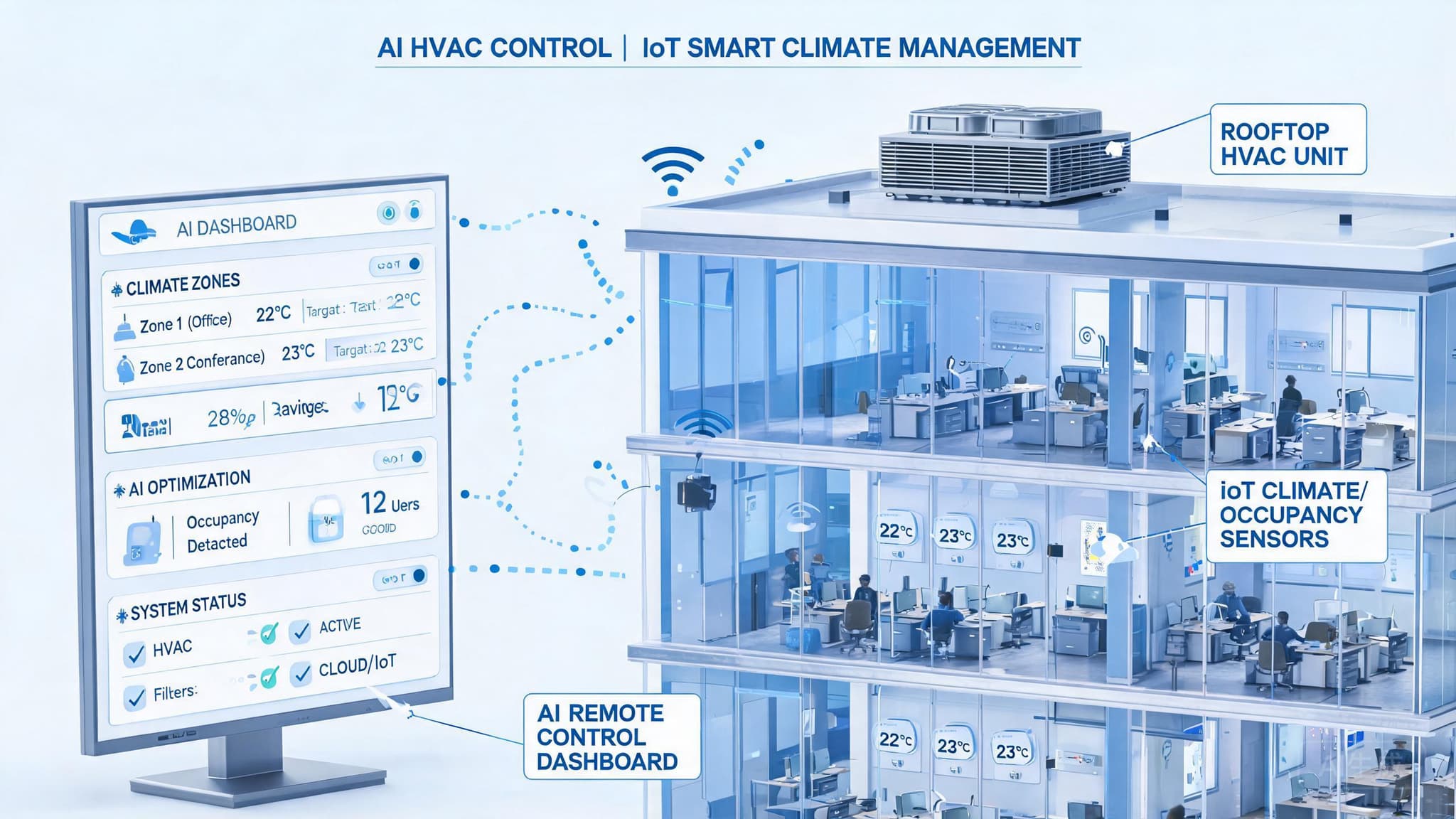
The landscape of building management has undergone a seismic shift. Gone are the days when facility managers relied solely on reactive maintenance and rigid schedules to manage climate control. In 2026, the integration of Artificial Intelligence (AI) into Heating, Ventilation, and Air Conditioning (HVAC) systems is not just an upgrade; it is a complete redefinition of how buildings function. This evolution is driving a convergence of sustainability, cost-efficiency, and human-centric design, marking a new era in the Internet of Things (IoT) ecosystem.
The AI Paradigm Shift in Climate Control
The transition to AI-driven HVAC represents a move from static automation to dynamic intelligence. Traditional building management systems (BMS) operated on fixed schedules—if it was 9:00 AM, the cooling kicked on, regardless of the actual thermal load or weather conditions. Today, AI algorithms process vast datasets to make real-time decisions.
These systems utilize machine learning to understand the "personality" of a building. By analyzing historical data, current weather patterns, and occupancy rates, AI models can predict thermal load hours in advance. This shift allows buildings to operate proactively rather than reactively. The result is a system that maintains optimal comfort levels while simultaneously minimizing energy waste. The distinction is critical: traditional automation executes commands, whereas AI optimizes outcomes.
The Rise of the Smart Thermostat 2.0
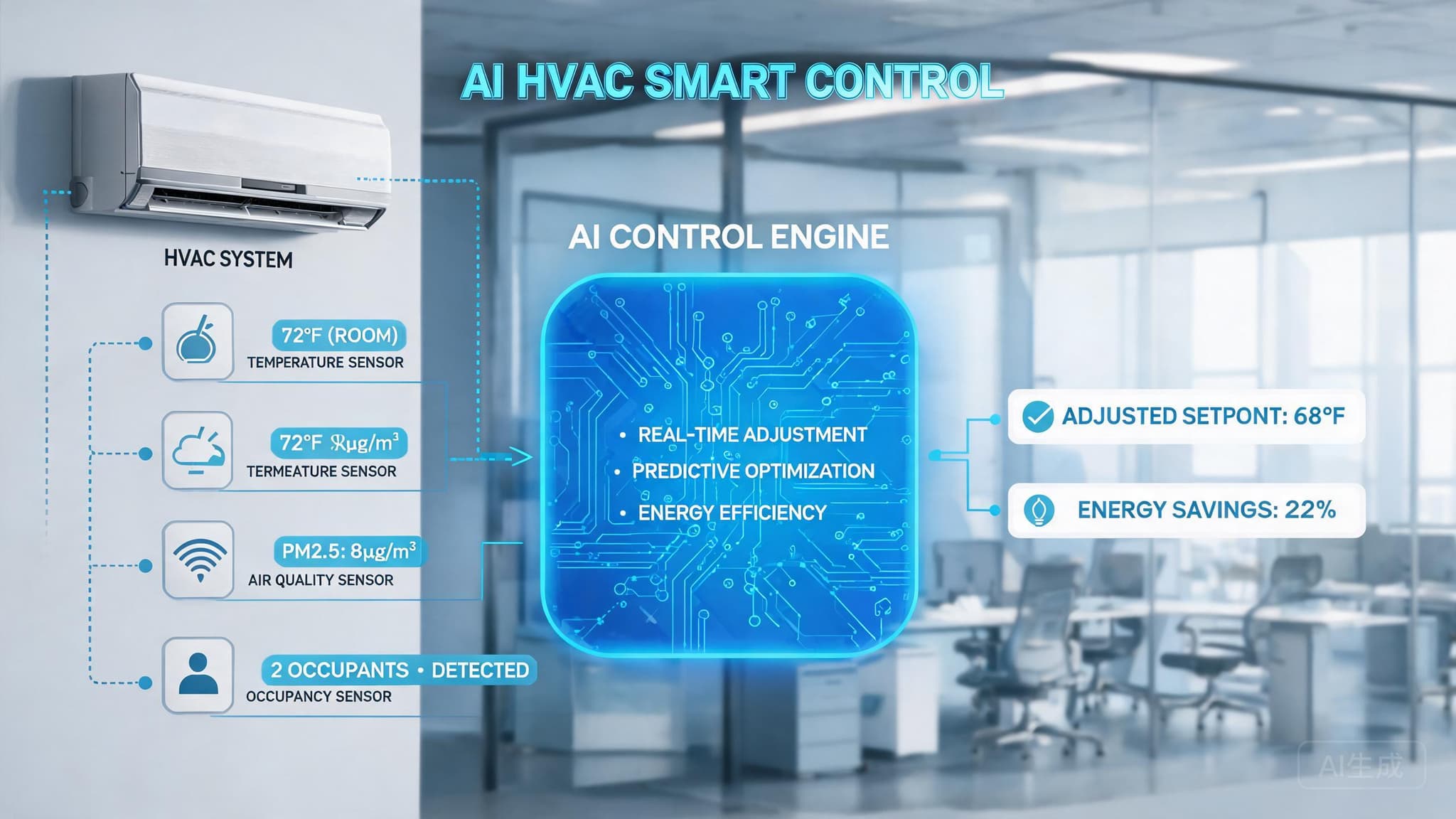
At the consumer and enterprise edge of this revolution are the new generation of smart thermostats. These devices have evolved far beyond simple Wi-Fi-enabled remotes. In 2026, a smart thermostat serves as a localized intelligence hub, equipped with sensors that monitor motion, humidity, and even air quality metrics like CO2 and volatile organic compounds (VOCs).
Learning Occupancy Behaviors
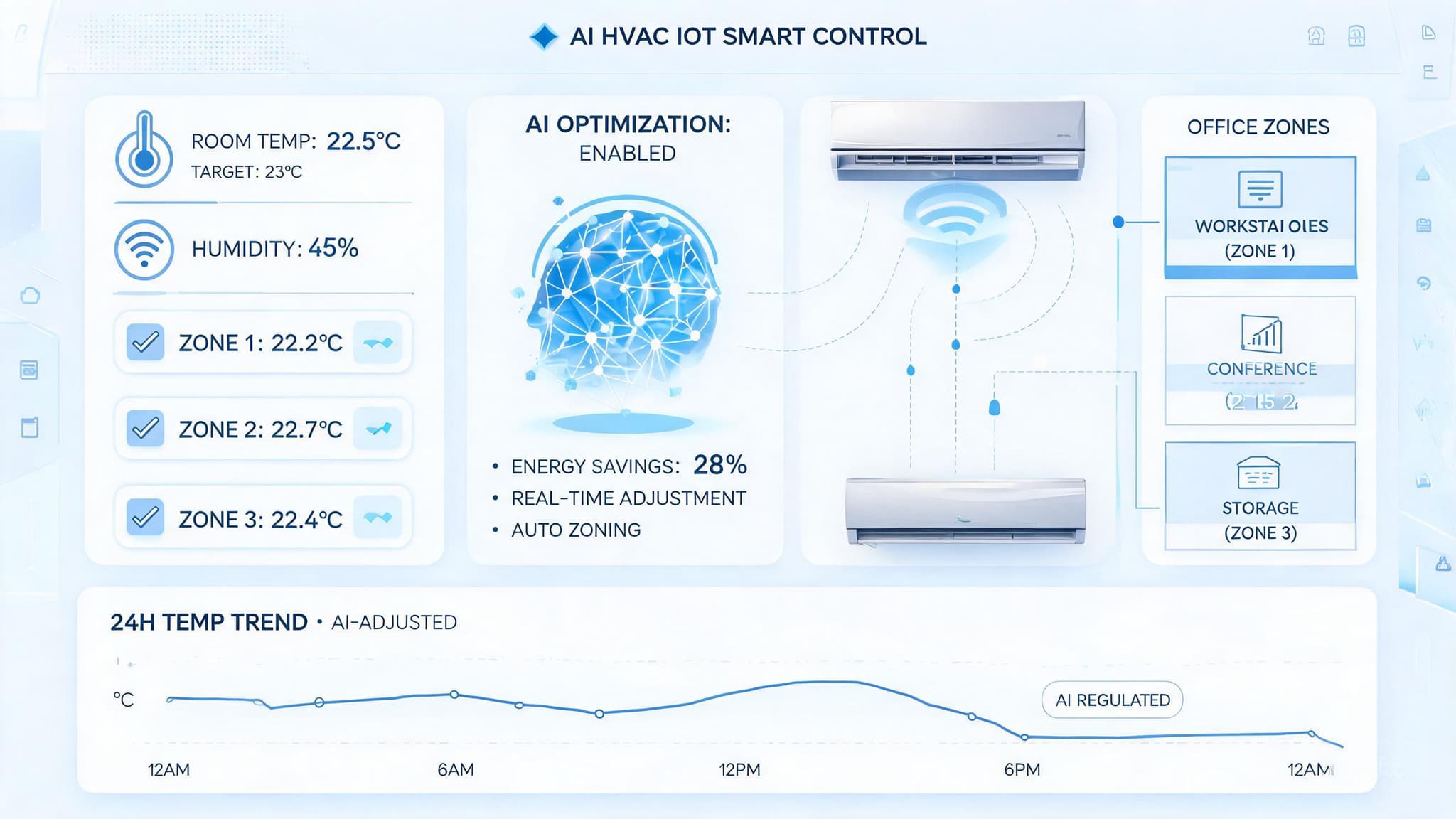
Modern AI thermostats utilize "occupancy analytics" to refine their control strategies. Rather than relying on a simple motion detector to turn lights on or off, these systems build complex models of human behavior. They learn when specific zones of a building are typically occupied and how solar gain affects temperature throughout the day. If a conference room is consistently booked every Tuesday at 2:00 PM, the HVAC system pre-conditions the space an hour prior, ensuring immediate comfort upon arrival, and scales back instantly once the meeting ends.
Integration with Wearables and IoT
The sophistication of these systems is further amplified by their integration with the broader IoT ecosystem. In cutting-edge smart buildings, HVAC systems can interface with employee badges or smartphone sensors to detect occupancy density. This granular data allows for hyper-targeted climate control, cooling only the specific floors or wings currently in use, rather than wasting energy conditioning empty spaces.
Predictive Maintenance: The End of Emergency Repairs
Perhaps the most financially impactful application of AI in HVAC is predictive maintenance. For decades, facility managers operated on a "run-to-failure" or preventative maintenance schedule. Components were replaced on a fixed timeline, whether they needed it or not, or repaired only after they had broken down, causing tenant discomfort and emergency service fees.
Detecting Anomalies Before Disaster
AI changes this equation by monitoring the health of equipment continuously. Vibration sensors, acoustic monitors, and thermal imaging cameras feed data to machine learning models that establish a baseline of normal operation. When a compressor begins to vibrate at a slightly irregular frequency, or when a heat exchanger shows a minute efficiency drop, the AI flags the anomaly.
This capability allows facility managers to address a failing bearing or a refrigerant leak weeks before a catastrophic failure occurs. The implications are profound: reduced downtime, extended equipment lifespan, and lower capital expenditures.
Digital Twins and Simulation
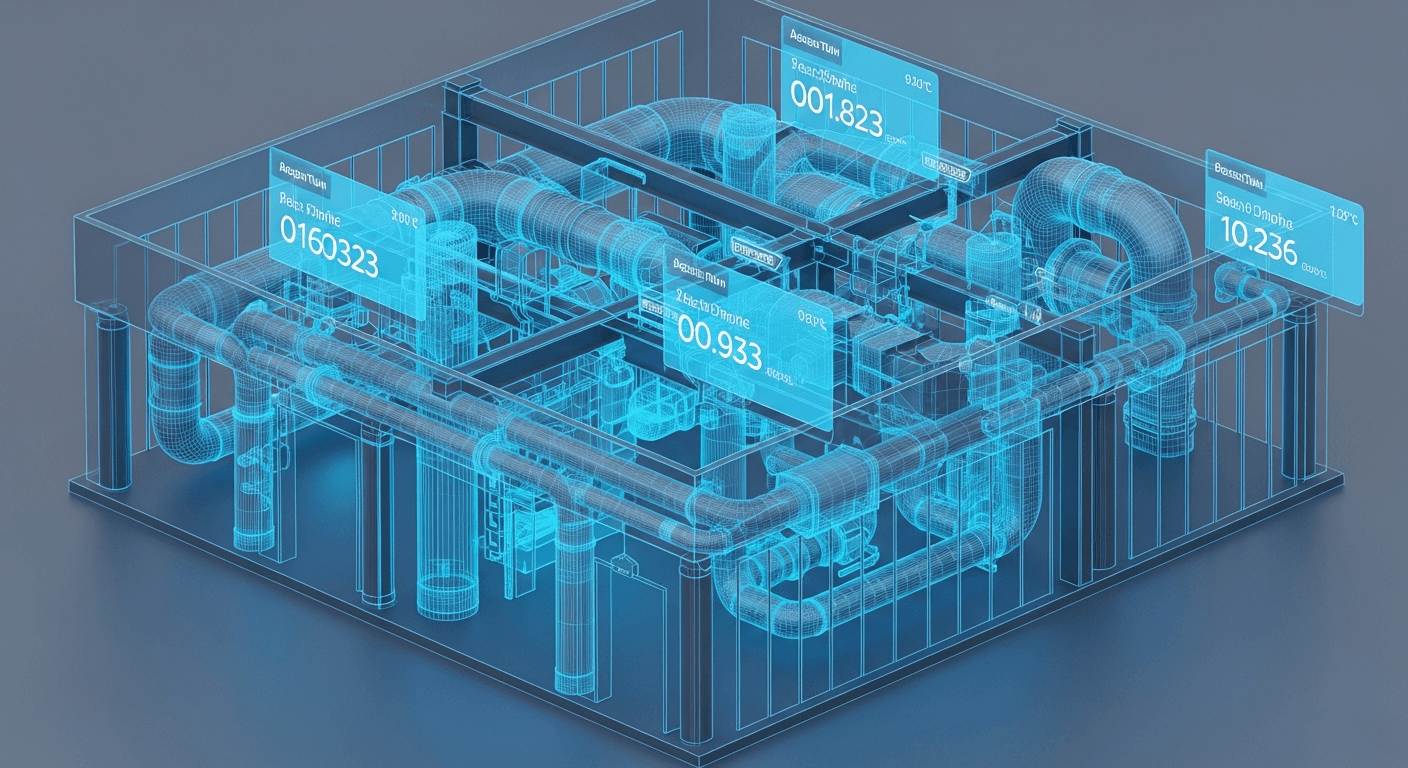
Supporting these predictive capabilities is the rise of "Digital Twin" technology. Facility managers can now create a virtual replica of their physical HVAC systems. By simulating different stress scenarios in the digital twin, operators can predict how equipment will perform under extreme weather conditions and identify potential weak points in the system before they manifest in the real world.
Energy Efficiency and the Sustainability Mandate
With global regulations tightening around carbon emissions, AI-powered HVAC has become a critical tool for achieving sustainability goals. Buildings account for nearly 40% of global energy-related CO2 emissions, and HVAC systems represent the largest portion of that energy usage.
Optimizing for Grid Demand
In 2026, AI-driven systems are increasingly integrated with smart grid initiatives. These "Grid-Interactive" buildings can respond to signals from utility providers. During periods of peak demand or high electricity prices, the AI can automatically pre-cool the building using thermal mass storage techniques, then reduce power consumption during the expensive peak hours. This not only lowers costs but also stabilizes the local energy grid, preventing blackouts and reducing the reliance on carbon-intensive peaker plants.
Continuous Commissioning
A major source of energy waste in buildings is "drift." Over time, sensors lose calibration, dampers stick, and filters clog, causing the system to work harder to maintain the same temperature. AI systems utilize a process called continuous commissioning. The software constantly compares the building's actual energy performance against its theoretical baseline. If the system detects that energy consumption is creeping upward without a change in weather or occupancy, it identifies the specific asset responsible and alerts maintenance teams.
Challenges and Implementation Barriers
Despite the clear benefits, the adoption of AI-HVAC is not without challenges. The primary hurdle remains data security. As HVAC systems become more connected and intelligent, they become potential entry points for cyberattacks. A compromised HVAC system can be used to disable a building's climate control or, worse, serve as a gateway to the broader IT network.
Furthermore, there is the issue of legacy infrastructure. Retrofitting 20th-century buildings with the sensor density required for effective AI control is expensive and logistically difficult. However, the falling cost of wireless IoT sensors and battery-less energy harvesting switches is rapidly mitigating this barrier.
The Future: Generative AI and Beyond
Looking toward the immediate future, the next frontier for HVAC is Generative AI. While current AI systems optimize existing parameters, generative models may eventually design new control strategies that human engineers would never conceive of. We are also seeing the emergence of "occupant-centric" controls, where the system moves beyond simple temperature management to actively manage cognitive function and sleep-wake cycles by adjusting circadian lighting and airflow.
Conclusion: The Necessity of Intelligent Buildings
The revolution brought about by AI-powered HVAC systems in 2026 is about much more than smart gadgets. It is a fundamental rethinking of the built environment. We are moving from static, reactive structures to living, breathing entities that respond intelligently to their inhabitants and the environment. For building owners and facility managers, the message is clear: the future belongs to those who can leverage data to create environments that are efficient, sustainable, and profoundly human-centric. Embracing this technology is no longer a luxury; it is an operational imperative for the modern world.
Frequently Asked Questions
How exactly does AI reduce HVAC energy consumption compared to a programmable thermostat?
While a programmable thermostat follows a fixed schedule, AI analyzes real-time data like weather, humidity, and occupancy. It learns how long it takes to heat or cool a space (thermal lag) and starts the process at the exact optimal time, avoiding the energy waste of overheating or overcooling.
Can AI HVAC systems work with older equipment?
Yes, one of the strengths of modern AI-HVAC solutions is their ability to retrofit legacy infrastructure. Wireless IoT sensors can be attached to old boilers, chillers, and air handlers to monitor their performance. While precise control is better with modern variable speed drives, significant savings can be achieved by optimizing the runtime of older equipment.
Is my building data safe with an AI system running in the cloud?
Security varies by vendor, but reputable IoT HVAC platforms use bank-grade encryption and tokenized authentication. However, as systems become more connected, risk increases. It is crucial to work with vendors who adhere to ISO 27001 standards and offer regular firmware updates to patch vulnerabilities.
What is the ROI (Return on Investment) for implementing AI in HVAC?
Studies indicate that AI-driven HVAC optimization typically reduces energy consumption by 20-30%. Combined with the reduction in maintenance costs due to predictive diagnostics, the ROI is often realized within 12 to 24 months for medium to large commercial buildings.
Do AI systems require constant human supervision?
Once the initial "learning" phase is complete—which can take a few weeks depending on the season—the system operates largely autonomously. However, human oversight is required to review the "exception reports" generated by the AI and to handle physical repairs that the software cannot perform itself.