Smart Climate Control: The Future of Intelligent HVAC Systems
Discover how IoT and machine learning are converging to create intelligent HVAC systems that optimize energy consumption and redefine human comfort in modern buildings.
The global climate control industry is currently undergoing a transformation that rivals the shift from mechanical to digital systems. For decades, the standard Heating, Ventilation, and Air Conditioning (HVAC) setup relied on relatively static logic: a thermostat reads the temperature, and if it’s too hot, it turns on the compressor. If it’s too cold, it activates the furnace. While functional, this binary approach is inherently inefficient, resulting in energy waste and fluctuating comfort levels.
We are now entering the era of the Intelligent Building, where the HVAC system is no longer a passive machine but a proactive, data-driven ecosystem. By harnessing the power of the Internet of Things (IoT) and Machine Learning (ML), modern climate control systems are redefining what it means to create an optimal indoor environment. These systems do not merely react to the current temperature; they predict, adapt, and optimize for the future.
The Convergence of IoT and Machine Learning in HVAC
The catalyst for this revolution is the seamless integration of IoT connectivity with advanced machine learning algorithms. In the past, an HVAC unit was an island, entirely disconnected from the building's other systems and the outside world. Today, smart HVAC systems are dense networks of sensors, actuators, and processing units that communicate continuously.
How the Data Flows
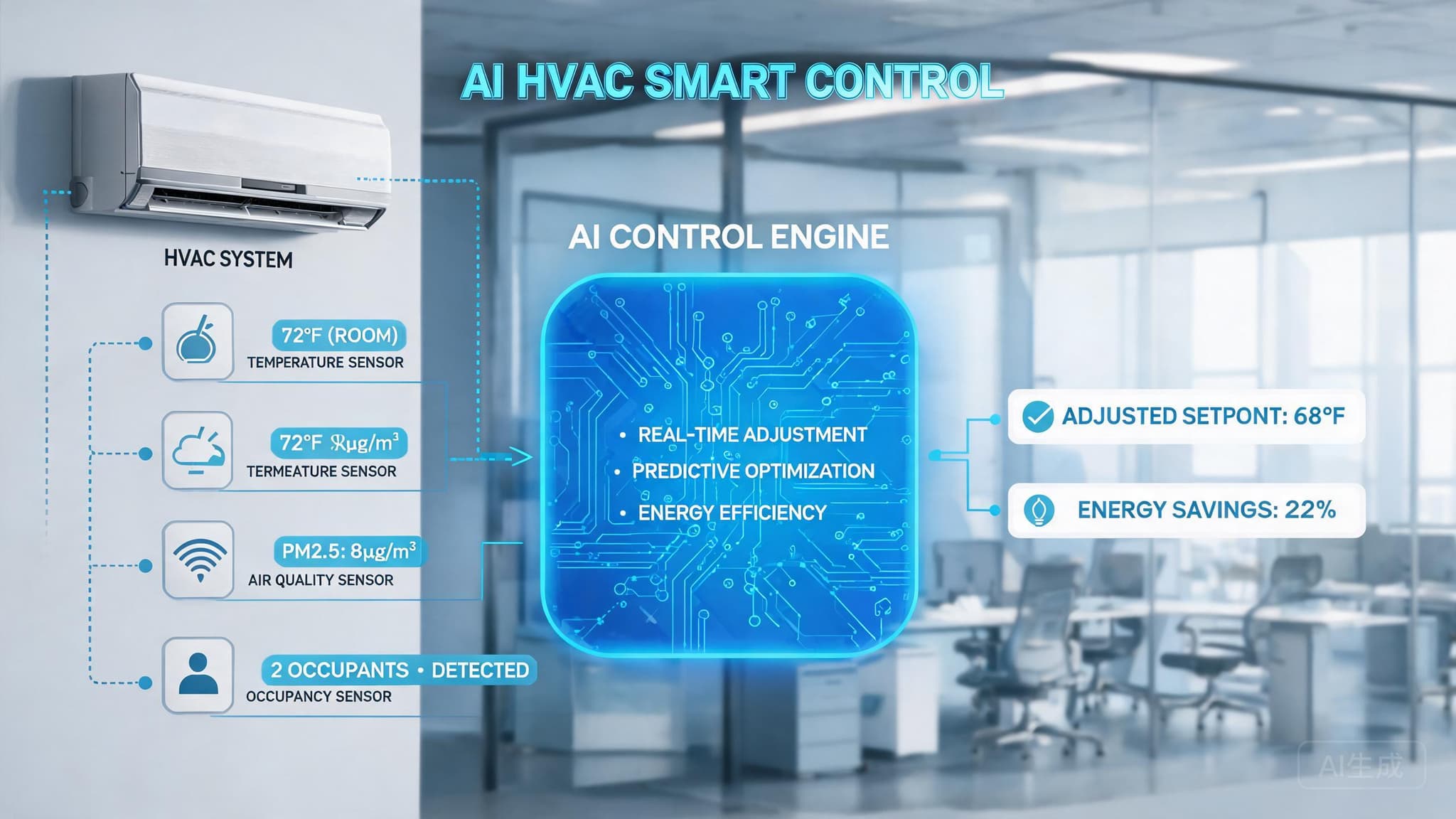
At the hardware level, IoT-enabled thermostats, sensors, and variable air volume (VAV) controllers collect granular data points every second. This includes:
- Ambient Temperature: Not just at the thermostat, but in specific zones and even near windows.
- Humidity Levels: Critical for both human comfort and the preservation of building materials.
- Air Quality: Monitoring CO2 levels and volatile organic compounds (VOCs) to adjust ventilation rates dynamically.
- Occupancy: Using motion detection and even Wi-Fi triangulation to determine exactly how many people are in a room.
However, collecting data is only half the battle. The true intelligence lies in the processing. This data is transmitted to cloud-based platforms or processed on the edge using Machine Learning models. These algorithms analyze historical patterns to make real-time decisions. Instead of waiting for a room to become overheated to react, the system learns that every day at 2:00 PM, direct sunlight floods the conference room, raising the temperature. Consequently, it pre-cools the space at 1:30 PM, ensuring a perfectly stable environment without the energy spike associated with rapid cooling.
Beyond the Thermostat: The Benefits of Intelligent Climate Control
The move to smart, IoT-driven HVAC systems offers benefits that extend far beyond simple temperature adjustments. For facility managers, building owners, and tenants, the implications are profound.
1. Dramatic Energy Optimization and Cost Reduction
Energy consumption is the single largest operating cost for most commercial buildings. Traditional HVAC systems often operate on fixed schedules, cooling an empty office building from 6:00 AM to 8:00 PM, regardless of whether employees are working late or have left early.
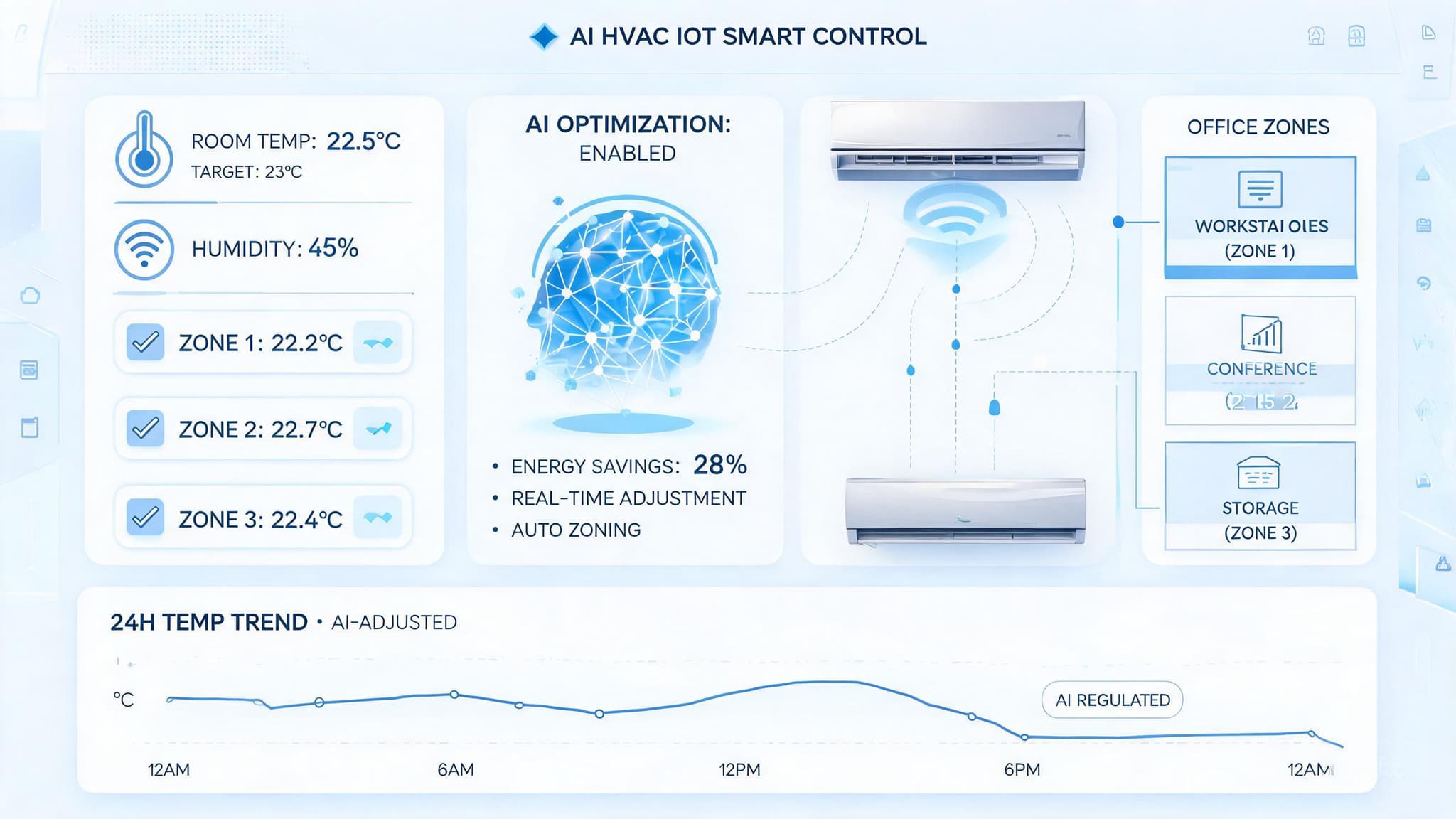
Intelligent systems dismantle this inefficiency. By utilizing occupancy sensors and predictive analytics, these systems ensure that energy is only used where and when it is needed. ML algorithms can also detect "energy drift"—a gradual decline in system efficiency due to wear and tear or dirty filters—and alert maintenance teams before the energy bill spikes. Industry estimates suggest that IoT-enabled HVAC optimization can reduce energy costs by 20% to 30%, a massive figure for large-scale commercial operations.
2. Predictive Maintenance vs. Reactive Repair
One of the most significant pain points in facility management is the sudden failure of critical equipment. A broken chiller in July or a failed boiler in January is not just an inconvenience; it is an emergency that often leads to expensive overtime repair rates and equipment replacement costs.
Smart HVAC systems utilize Predictive Maintenance. By constantly monitoring vibrations, temperature deltas, and electrical currents, the AI can identify the early warning signs of component failure. For example, a bearing in a fan motor might begin to vibrate at a specific frequency weeks before it actually seizes. The system flags this anomaly, allowing a technician to replace the part during scheduled downtime. This shift from reactive to proactive maintenance extends equipment lifespan and drastically reduces downtime.
3. Enhanced Occupant Comfort and Health
Comfort is subjective, and it is about more than just air temperature. Dry air, high CO2 concentrations, and stuffiness can lead to "Sick Building Syndrome," resulting in headaches, fatigue, and reduced productivity among workers.
Smart HVAC systems actively manage air quality. If CO2 levels rise in a packed meeting room, the system automatically increases the fresh air intake. If humidity drops in the winter, the system triggers humidifiers to prevent skin irritation and static buildup. This holistic approach to the indoor environment quality (IEQ) results in higher occupant satisfaction and improved cognitive function.
Real-World Applications and Case Studies
To understand the practical impact of these technologies, we must look at how they are being deployed in the field. The versatility of IoT HVAC allows it to scale from small residential setups to massive industrial complexes.
Commercial Offices: The "Living" Building
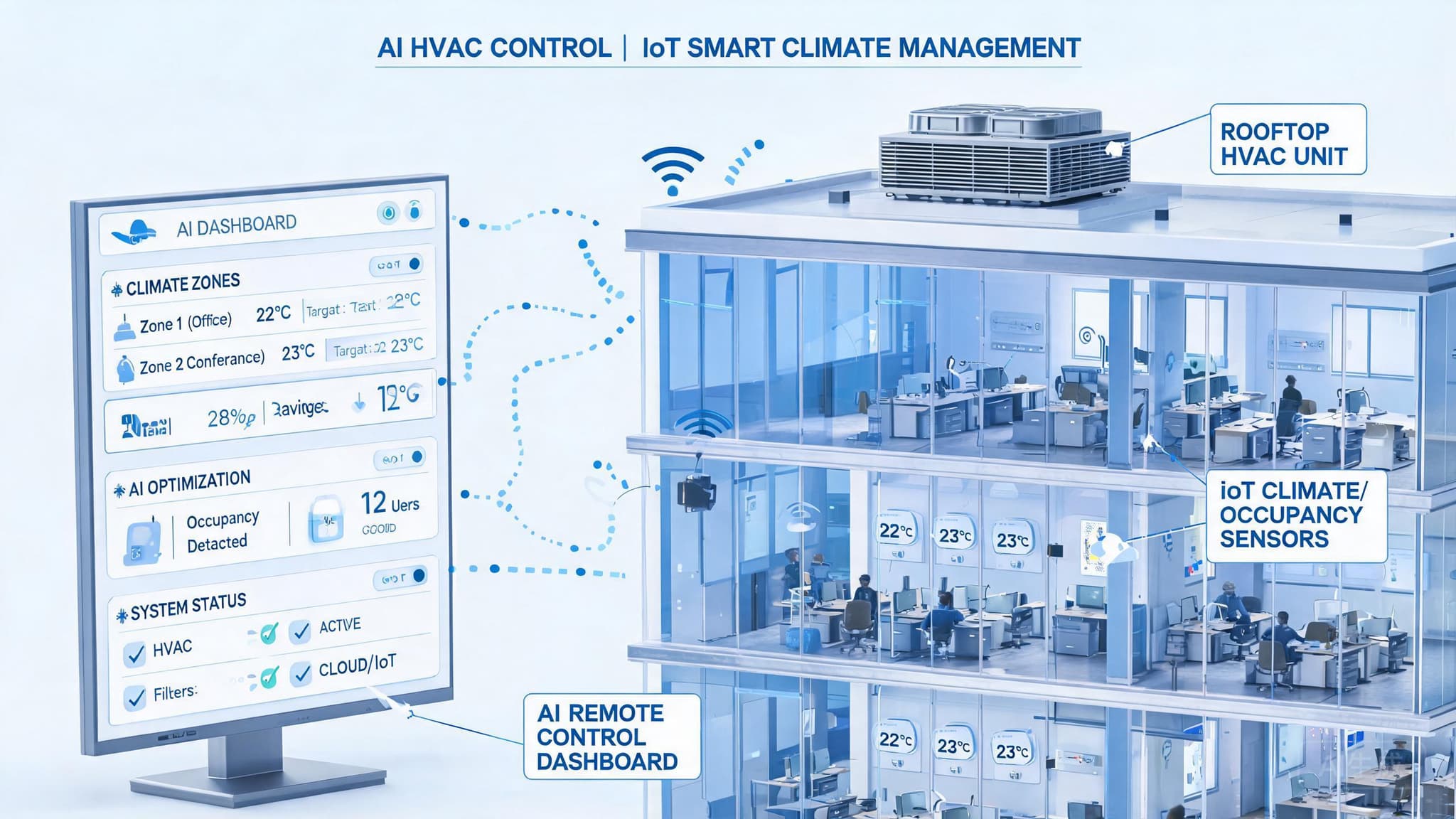
Consider a modern high-rise office tower. A centralized Building Management System (BMS) acts as the brain, receiving data from thousands of IoT nodes. If a specific floor is under renovation and unoccupied, the BMS automatically shuts down airflow to that zone, redirecting resources to occupied floors. Furthermore, the system integrates with weather forecasts. If a cold front is moving in, the system ramps up heating gradually overnight, rather than waiting for the morning thermostat reading to trigger a massive energy draw.
Industrial and Data Center Cooling
In data centers, where cooling accounts for nearly 40% of total energy consumption, precision is paramount. IoT sensors monitor hot and cold aisles, adjusting fan speeds in real time to prevent server overheating while minimizing wasted cool air. Machine learning models can simulate different cooling scenarios to find the absolute most efficient configuration without risking equipment safety.
Residential Smart Ecosystems
While commercial applications lead the way, the residential sector is following suit. Smart home hubs now communicate with HVAC systems to learn a family's schedule. The house can be kept in an "eco-mode" (wider temperature range) while the family is at work and school, then return to a precise comfort level just before the first person arrives home. Crucially, modern systems no longer rely on a single sensor in the hallway. They utilize room-specific sensors, ensuring that the bedrooms are cool for sleeping while the kitchen remains comfortable for morning prep.
The Technical Architecture: From Edge to Cloud
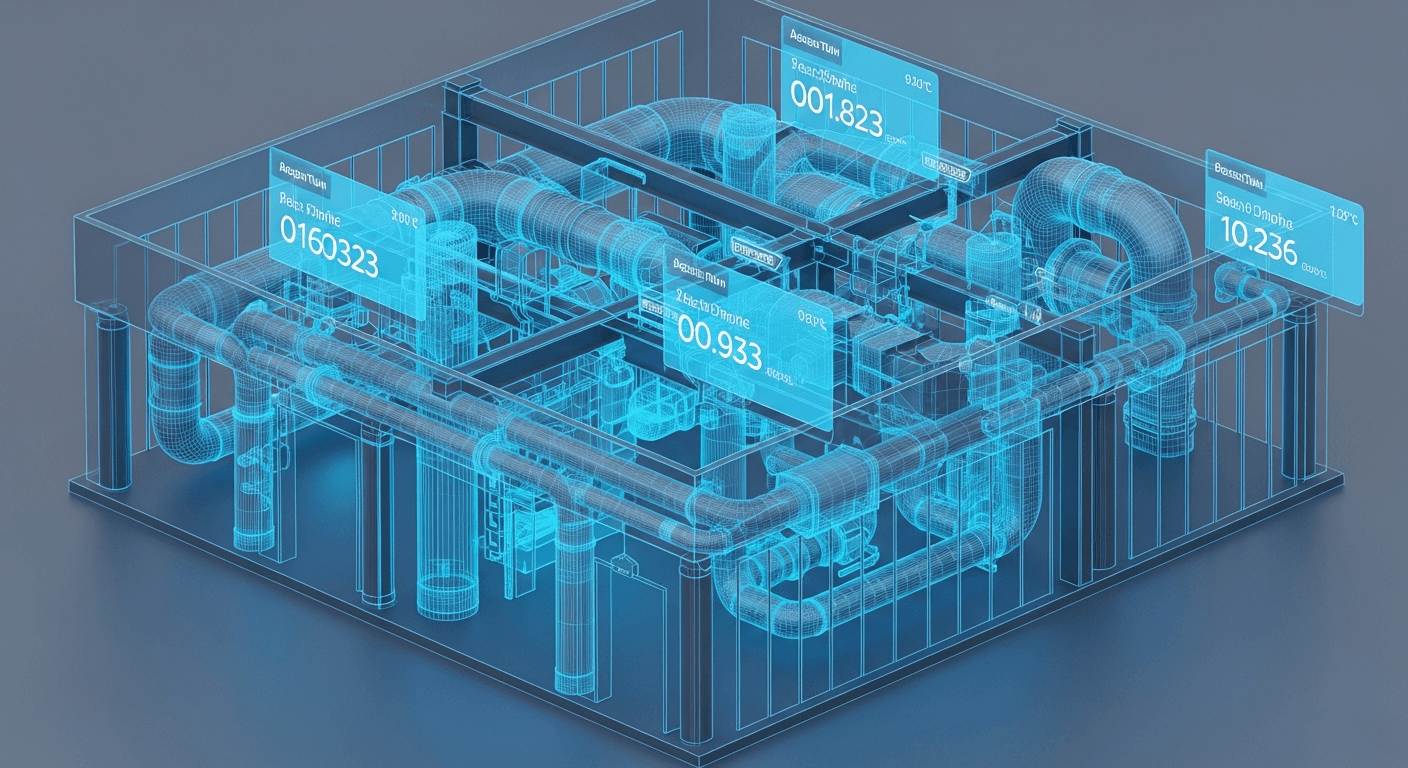
Understanding the backbone of these systems is essential for industry professionals. The architecture of intelligent HVAC is typically a hybrid of Edge Computing and Cloud Processing.
- Edge Computing: Decisions that require millisecond responses—such as opening a damper or adjusting a fan speed—must happen locally at the "edge" to prevent latency issues. The IoT gateway processes these local signals instantly.
- Cloud Analytics: Heavy data lifting, such as running energy simulations, analyzing long-term trends, and training machine learning models, happens in the cloud. The cloud aggregates data from multiple buildings, allowing the AI to learn from a vast dataset of climate control scenarios, constantly improving the algorithms used at the edge.
This two-tier architecture ensures reliability and responsiveness while allowing for complex, long-term optimization strategies.
Cybersecurity in the Age of Connected Buildings
With the rise of IoT comes the necessity of robust cybersecurity. An HVAC system is no longer just a mechanical device; it is a network endpoint. A compromised HVAC system can be used as an entry point to attack a building's larger IT network, or worse, used to hold the building's climate control hostage.
Future-proofing these systems requires:
- Network Segmentation: Keeping HVAC controls on a separate VLAN from the main corporate network.
- Encryption: Ensuring data sent between sensors and the cloud is unreadable if intercepted.
- Regular Firmware Updates: Automatically patching vulnerabilities in IoT devices.
As we move forward, security standards must be treated with the same rigor as energy efficiency standards.
The Future Outlook: AI and the Net-Zero Goal
The trajectory of HVAC innovation is pointing firmly toward Artificial Intelligence (AI) and Net-Zero Energy Buildings. As global regulations regarding carbon emissions tighten, the ability of an HVAC system to self-optimize will become a compliance necessity rather than a luxury.
We are moving toward a future where buildings will automatically participate in Demand Response programs. During peak energy usage hours on the grid, a building's AI will automatically decide to pre-cool the space (using thermal mass) and then reduce HVAC load during the expensive peak window, stabilizing the grid and saving money. This level of orchestration is only possible through the深度融合 of IoT and advanced AI.
FAQs About Smart HVAC Systems
1. What is the difference between a programmable thermostat and a smart HVAC system? A programmable thermostat operates on a fixed schedule you set (e.g., "Down to 68 degrees at 5 PM"). It is reactive. A smart HVAC system uses sensors and machine learning to adapt to real-time conditions, such as occupancy, weather, and humidity, optimizing the environment automatically without manual programming.
2. Can I retrofit an existing HVAC system to be IoT-enabled? Yes, in many cases. You do not always need to replace the furnace or air handler. Smart thermostats and smart vents can be installed to bring zoning control and connectivity to older systems. However, for maximum efficiency, integration with variable speed motors and modern controllers is ideal.
3. How much money can a business actually save with intelligent climate control? While it varies by building size and usage, businesses typically see a return on investment within 2-3 years. Savings come from reduced energy bills (often 20-30%), lower maintenance costs due to predictive alerts, and extended equipment lifespan.
4. Are smart HVAC systems difficult to maintain? Paradoxically, they are easier to maintain, though they require a different kind of maintenance. Instead of scheduled manual checkups, the system monitors itself. Facility managers simply need to monitor the dashboard for alerts. The complexity shifts from physical labor to digital oversight.
5. Does smart climate control improve air quality? Yes. Modern IoT sensors are equipped to detect CO2, VOCs, and particulate matter. When these levels rise, the system can automatically increase the rate of fresh air intake or trigger air purification cycles, ensuring the indoor environment remains healthy.
6. What happens if the internet goes down? Will my HVAC stop working? Most high-quality commercial IoT HVAC systems utilize "local control." If the internet connection is lost, the system defaults to a local mode where it continues to operate based on the last known settings or local sensor data. It may lose "smart" features like weather adaptation, but it will not leave the building without climate control.
7. Is the data collected by HVAC sensors private? Data privacy is a valid concern, especially in residential settings. Reputable manufacturers anonymize data, ensuring that usage patterns are aggregated for machine learning improvements without being tied to specific individuals. In commercial settings, data belongs to the business and is covered by corporate security policies.
Conclusion
The era of the "dumb" building is ending. The convergence of IoT, Machine Learning, and advanced climate control technologies is creating indoor environments that are more responsive, efficient, and humane than ever before. For businesses, the adoption of intelligent HVAC is no longer just about operational cost savings; it is a strategic move toward sustainability, occupant well-being, and future-proofing assets in a digital-first world.
As we look to the future, the question is no longer if we should adopt smart climate control, but how quickly we can integrate these intelligent systems to build a more sustainable and comfortable world.