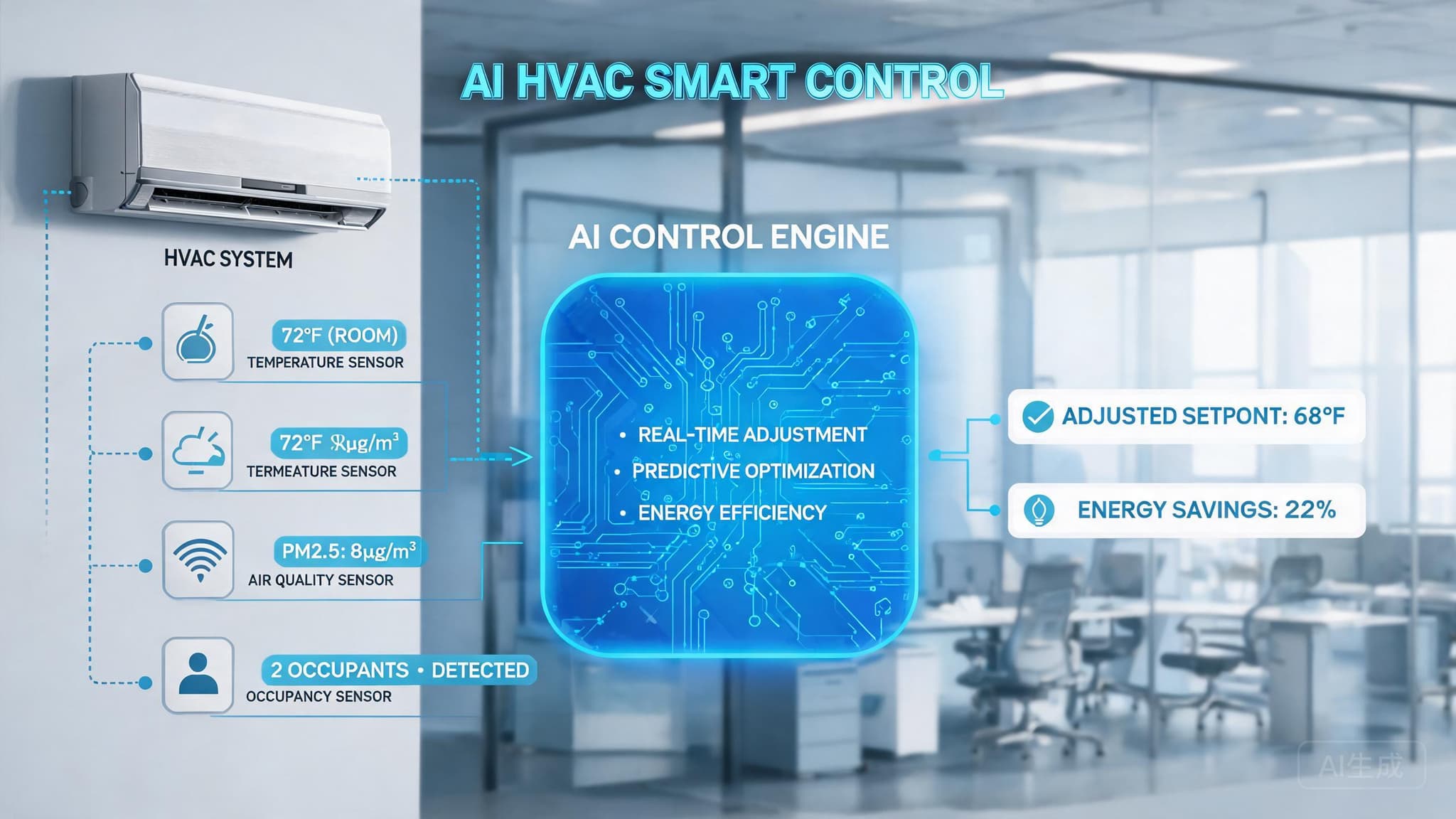
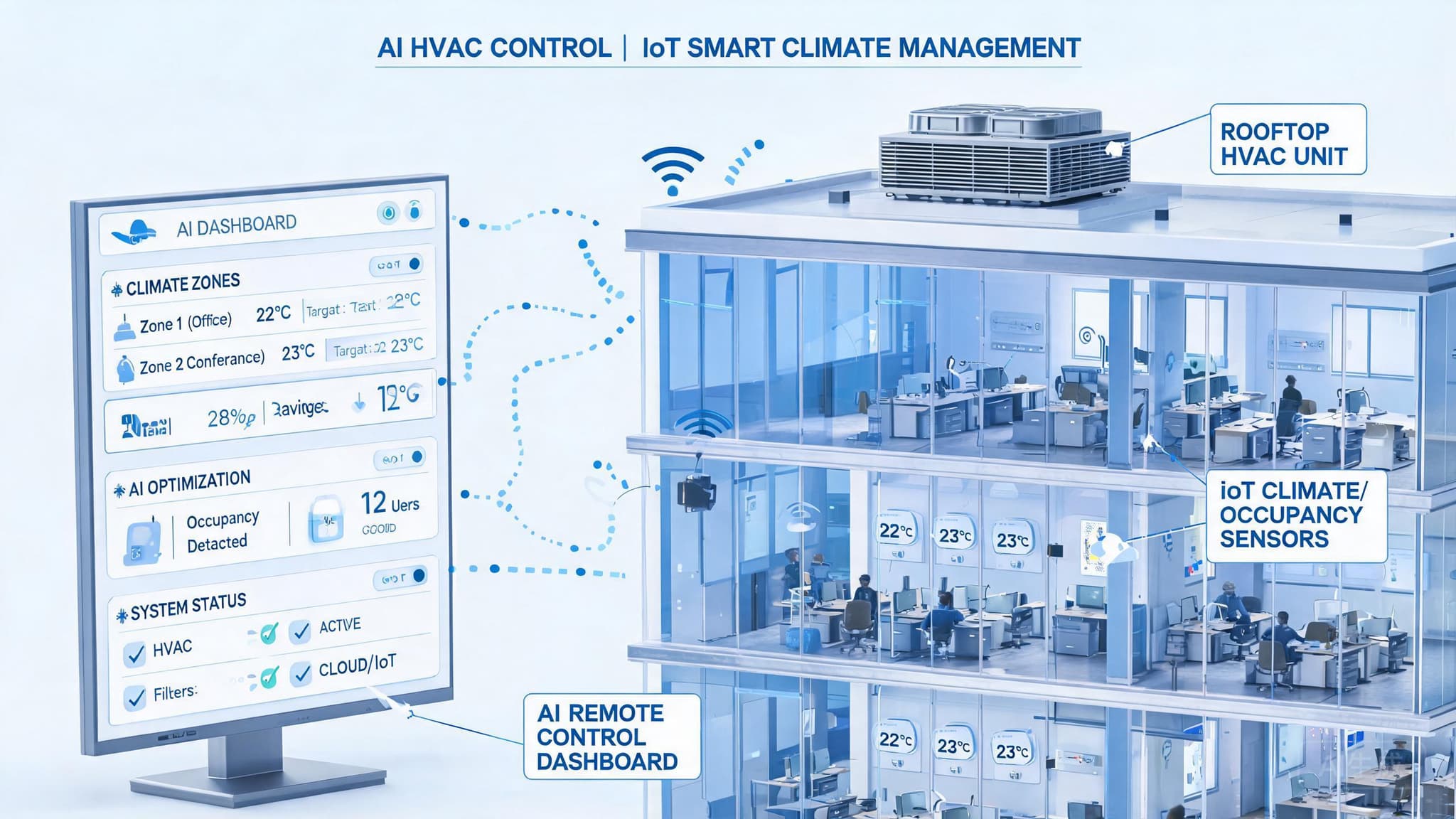
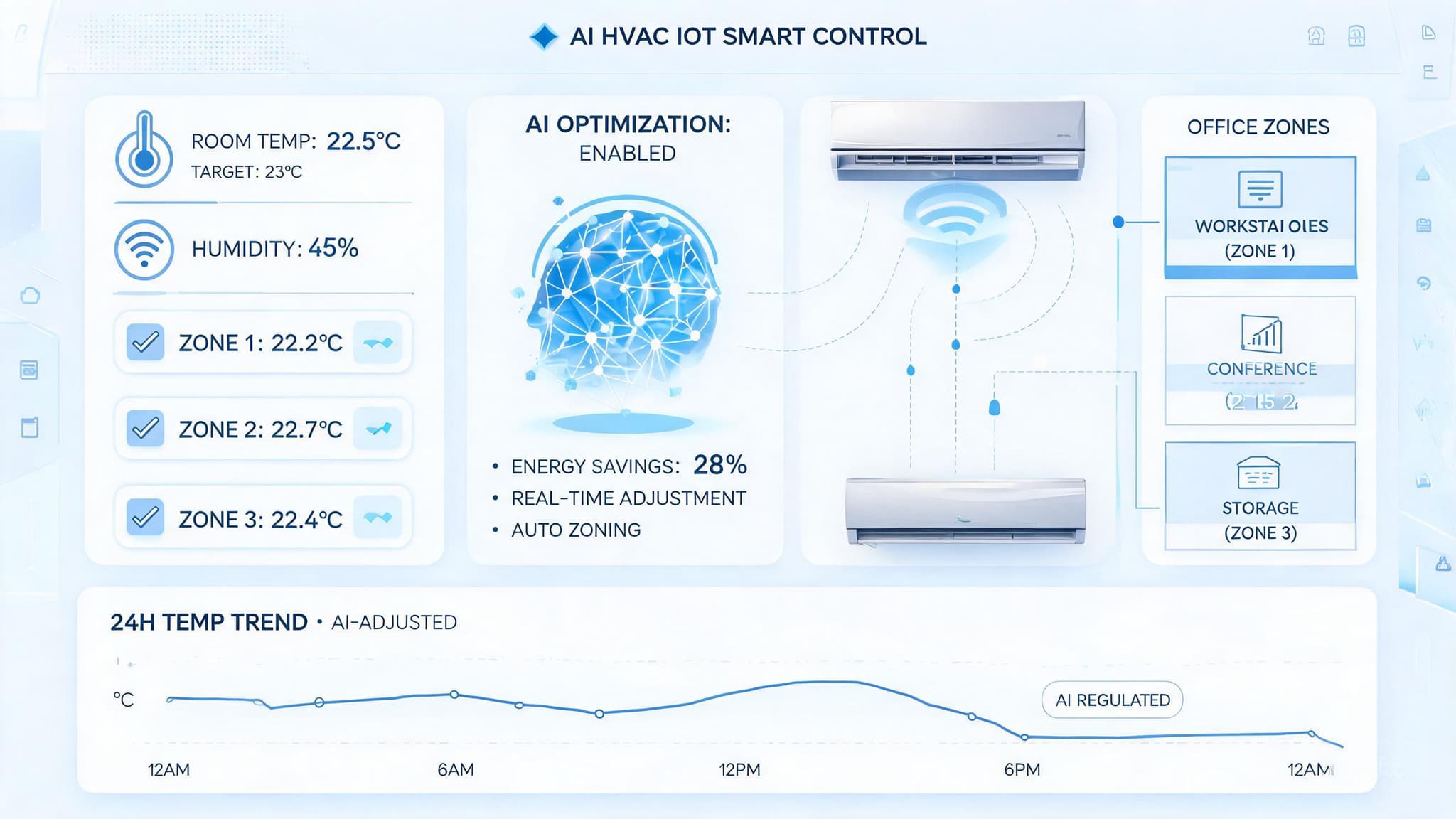
AI HVAC Control
NTT, Kubota, and DOCOMO test links for remote farm robots
NTT, Kubota, and NTT DOCOMO have completed a joint demonstration aimed at stabilising communications for remote farm robots operating in mountainous areas. The test combined mobile and satellite communications with video control technology to support continuous video transmission. The companies said the system maintained video visibility even when communication conditions fluctuated. Japan has been promoting […] The post NTT, Kubota, and DOCOMO test links for remote farm robots appeared first on...
CONTEXUSJune 7, 2026
{
  "title": "NTT, Kubota, and DOCOMO Test Links for Remote Farm Robots",
  "excerpt": "In a groundbreaking move for smart agriculture, NTT, Kubota, and NTT DOCOMO have successfully demonstrated a hybrid mobile-satellite communication system designed to stabilize remote robot operations in Japan's mountainous regions. This technology promises to solve critical connectivity issues hindering autonomous farming, ensuring continuous video visibility and control regardless of terrain.",
  "content": "# NTT, Kubota, and DOCOMO Test Links for Remote Farm Robots\n\nThe agricultural landscape is on the cusp of a technological revolution, yet the physical realities of farming—specifically challenging terrain—often outpace digital capabilities. In a significant stride toward overcoming these hurdles, NTT, Kubota, and NTT DOCOMO have completed a joint demonstration aimed at stabilizing communications for remote farm robots operating in mountainous areas.\n\nThis collaboration addresses one of the most persistent bottlenecks in smart agriculture: maintaining reliable connectivity in environments where traditional mobile networks are inconsistent. By combining mobile and satellite communications with advanced video control technologies, the trio has successfully proven that remote operations can remain stable and visible, even when communication conditions fluctuate drastically.\n\n## The Urgent Need for Smart Agriculture in Japan\n\nTo understand the gravity of this technological demonstration, one must first look at the demographic crisis gripping Japan's agricultural sector. The push toward smart agriculture is not merely a pursuit of efficiency; it is a matter of survival for the industry.\n\nJapan has been aggressively promoting smart agricultural technologies as its farming workforce rapidly ages and shrinks. According to data from the Ministry of Agriculture, Forestry and Fisheries (MAFF), Japan had approximately 1.40 million core persons primarily engaged in farming in 2019. The more telling statistic, however, is the average age of these workers: 66.8 years. With the younger generation migrating to urban centers, the manual labor force that has traditionally sustained Japan's mountainous farming regions is vanishing.\n\nConsequently, the Japanese government has introduced specific legislation designed to accelerate the adoption of smart agricultural technology. This policy framework includes robust support for service providers utilizing autonomous systems, such as drones and robotic combine harvesters. The goal is to offset the labor shortage through automation. However, for these autonomous machines to be truly effective, they must be able to operate reliably in the very environments where labor is scarcest—remote, hilly, and mountainous areas that are difficult for humans to access and equally difficult for machines to communicate.\n\n## The Connectivity Challenge in Non-Flat Terrains\n\nWhile autonomous tractors and robotic harvesters perform admirably in the flat, open plains of the Midwest or urban-controlled vertical farms, they face significant engineering hurdles in Japan's topographically diverse landscapes.\n\nThe recent demonstration focused specifically on unstable connectivity in fields where terrain and physical obstructions severely impact mobile network quality. In hilly and mountainous areas, line-of-sight issues can cause signal degradation, leading to dangerous latency or complete disconnections in the video and data feeds used to control agricultural robots.\n\nThe scale of this problem is vast. Japan’s hilly and mountainous regions account for approximately 40% of the country’s cultivated land. The Organization for Economic Co-operation and Development (OECD) has corroborated this, noting that these areas contribute significantly to Japan’s agricultural output despite facing physical disadvantages in production.\n\nFor robotic machinery to be viable in these regions, stable communication is not optional—it is a safety requirement. These robots must operate not only within isolated fields but also travel between them on public roads. Current regulatory frameworks in Japan regarding the use of robotic agricultural machinery on public roads mandate strict safety conditions, chief among them being the requirement for continuous, reliable remote monitoring. If a robot loses connection while traversing a public road, the liability and safety risks are substantial.\n\n## The Solution: A Multi-Link Hybrid Architecture\n\nTo solve this, the partnership between NTT, Kubota, and DOCOMO moved beyond standard connectivity solutions. They tested a sophisticated multi-link control approach that leverages the strengths of both terrestrial mobile networks and satellite communications.\n\n### Seamless Switching Mechanisms\n\nThe core of the system is its ability to aggregate data from multiple sources. The technology utilizes real-time communication quality data from both the mobile link and the satellite link to dynamically adjust the connection path.\n\nWhen the robot is in an area with strong mobile coverage, the system utilizes the high-bandwidth cellular network. However, as the robot moves behind a mountain or into a valley where mobile signal strength degrades, the system instantaneously transitions to satellite communications to supplement the connection. This "handover" is designed to be seamless, ensuring that the operator maintaining oversight of the robot experiences no drop in critical data feeds.\n\n### NTT’s Cooperative Infrastructure Platform\n\nNTT brought its \"Cradio\" wireless quality prediction technology to the table, alongside its Cooperative Infrastructure Platform. This platform acts as the brain of the operation, controlling multiple communication links based on predicted network quality rather than just reacting to current failures. By anticipating signal drops before they happen, the system can reroute data proactively, ensuring a stable connection for robotic machinery operating in mountainous farmland where mobile coverage is highly variable.\n\n## Intelligent Video Compression for Efficient Transmission\n\nOne of the largest bandwidth consumers in remote robotics is video. Sending high-definition video feeds from multiple cameras on a moving tractor requires significant bandwidth. In areas with connectivity issues, this is often the first thing to fail, resulting in pixelated or frozen images.\n\nThe joint demonstration addressed this with a nuanced approach to video control technology designed to keep remote video feeds usable even when bandwidth is constrained.\n\n### Region of Interest (ROI) Encoding\n\nInstead of treating the entire video feed with equal importance, the system utilizes \"Region of Interest\" encoding. This intelligent compression technique prioritizes image quality around the machine’s travel path and the immediate area surrounding visible crops—essentially, the areas the human operator needs to see to ensure safety and operational success.\n\nConversely, the system applies heavier compression to non-critical parts of the feed, such as the distant sky or static background vegetation. This approach preserves visibility where it matters most while reducing the overall data payload required for transmission.\n\n### Predictive Bandwidth Adjustment\n\nThe system goes a step further by utilizing the predicted communication bandwidth data supplied by NTT’s Cradio technology. Before network quality actually impacts the video feed, the system adjusts its compression rates. This predictive capability prevents the \"stuttering\" or buffering that usually occurs when a network suddenly degrades, ensuring a smooth viewing experience for the remote operator.\n\n## Roles and Responsibilities: A Synergistic Approach\n\nThis demonstration was a testament to the power of collaboration between distinct industry leaders. Each company brought a critical piece of the puzzle to the table:\n\n*   **NTT:** Provided the core communication intelligence, including the Cradio wireless quality prediction technology and the Cooperative Infrastructure Platform that orchestrates the multiple links. They also took the lead in implementing the technical architecture of the demonstration.\n*   **Kubota:** Supplied the \"muscle\"—the actual robotic agricultural machinery—and provided the field environment for the test. Their expertise in the mechanical requirements of farming ensured that the technology was tested in real-world scenarios.\n*   **NTT DOCOMO:** Leveraged its extensive experience in mobile video transmission to provide the video control technology, ensuring that the visual data could be efficiently compressed and transmitted over the fluctuating network.\n\n## The Broader Implications for the IoT Industry\n\nWhile the immediate application is agricultural robotics, the implications of this successful test extend far beyond the farm.\n\n### The Standard for \"Beyond 5G\" and 6G Applications\n\nThe integration of Non-Terrestrial Networks (NTN)—like satellites—with Terrestrial Networks (TN) is a cornerstone of the upcoming 6G standard. The NTT/Kubota/DOCOMO demonstration serves as a practical proof-of-concept for the \"ubiquitous connectivity\" promised by 6G. It validates the hypothesis that future IoT devices must be agnostic to the network type, switching seamlessly between ground and sky-based signals to maintain service.\n\n### Economic Viability of Rural Automation\n\nFor the global economy, this technology unlocks the economic potential of land that was previously too expensive to farm mechanistically. If robots can operate autonomously in mountainous regions without requiring a human to be physically present (or even virtually present with high latency), the cost of producing food in these areas decreases. This could revitalize rural economies that have been in decline, a trend relevant not just to Japan but to Europe, South America, and parts of the United States.\n\n### Safety and Liability in Autonomous Systems\n\nFor industries relying on autonomous heavy machinery, the video control technology demonstrated here offers a new standard for safety. By prioritizing the transmission of critical visual data, companies can better manage the liability associated with remote operations. It moves the industry from \"blind autonomy\" (where the robot acts alone) to \"in-the-loop autonomy,\" where a human supervisor can always intervene, regardless of network instability.\n\n## Conclusion\n\nThe collaboration between NTT, Kubota, and NTT DOCOMO represents a pivotal step forward in the quest for truly autonomous agriculture. By acknowledging the physical limitations of current network infrastructure and innovating around them with hybrid satellite-mobile links and intelligent video compression, they have provided a roadmap for the future of farming.\n\nAs Japan continues to grapple with an aging population and a shrinking workforce, technologies like this will transition from \"demonstrations\" to \"necessities.\" The ability to deploy robots safely in 40% of the nation's farmland—land that is currently difficult to cultivate—could be the key to securing the country's food future. For the global IoT industry, this serves as a clear signal: the future of connectivity is hybrid, and the robots of tomorrow will rely on a seamless web of networks stretching from the ground to the stars.\n\n---\n\n### FAQ: Remote Robot Connectivity and Hybrid Networks\n\n**1. Why is stable communication critical for remote farm robots?**\nStable communication is essential for safety and operational efficiency. Many agricultural robots, especially those traveling between fields on public roads, require constant human monitoring. If the video or data feed lags or cuts out due to poor connectivity, the robot could collide with obstacles, endangering people and property. Japan's current regulations specifically mandate remote monitoring as a safety condition for robotic machinery on public roads.\n\n**2. How does the combination of mobile and satellite links improve connectivity?**\nThis hybrid approach creates a \"best of both worlds\" scenario. Mobile networks (like 4G or 5G) offer high bandwidth and low latency but have limited range, especially in mountains. Satellite communications cover vast areas almost anywhere but can have higher latency. By using software that intelligently switches between the two—or combines them—the system ensures the robot always has a connection, using mobile when available and falling back to satellite when the terrain blocks the mobile signal.\n\n**3. What is \"Region of Interest\" video encoding?**\nRegion of Interest (ROI) encoding is a smart compression technique. Instead of compressing the entire video feed equally, the system identifies the most important parts of the image—such as the path directly in front of the tractor—and keeps that quality high. It then heavily compresses the background or irrelevant areas. This significantly reduces the amount of data needed to transmit a clear view of what matters to the operator.\n\n**4. What percentage of Japan’s agricultural land is considered hilly or mountainous?**\nApproximately 40% of Japan's cultivated land is located in hilly and mountainous regions. These areas present significant challenges for mechanization and connectivity, making the new hybrid network solution particularly relevant to the Japanese market.\n\n**5. What specific technologies did NTT and DOCOMO contribute to the test?**\nNTT provided \"Cradio,\" a technology for predicting wireless quality, and the \"Cooperative Infrastructure Platform\" which manages the switching between links. DOCOMO contributed the video control technology that enables the smart compression and prioritization of video data feeds to ensure they remain visible even under poor network conditions.\n\n**6. How does this technology address Japan's aging farming population?**\nJapan's average farmer is nearly 67 years old. As this workforce retires, there are fewer young people to replace them. Robotic machinery allows for autonomous farming, reducing the physical burden on older farmers or allowing them to manage larger operations remotely. Reliable connectivity is the missing link that allows these robots to operate safely in the complex terrains where many aging farmers live and work.\n\n**7. Is this technology applicable outside of agriculture?**\nYes, absolutely. While the test was focused on farming, the underlying technology—hybrid satellite-mobile networks and predictive video compression—is applicable to any industry requiring remote operations in rough terrain. This includes mining, forestry, construction, and disaster response, where connectivity is often spotty but critical for remote machinery and drones.",
  "category": "Agricultural IoT",
  "tags": ["Smart Agriculture", "Satellite Connectivity", "Robotics", "NTT DOCOMO", "Kubota", "IoT Connectivity", "Autonomous Farming"]
}