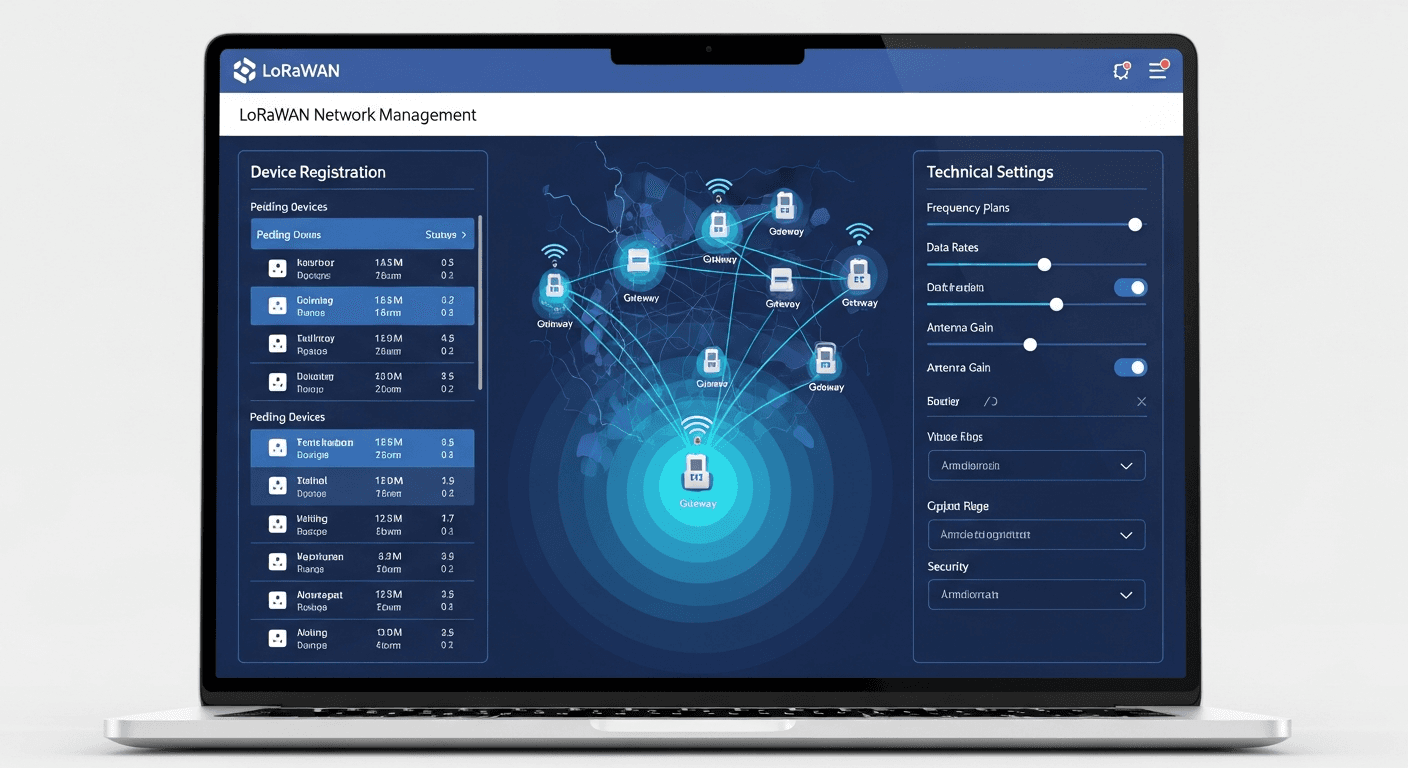
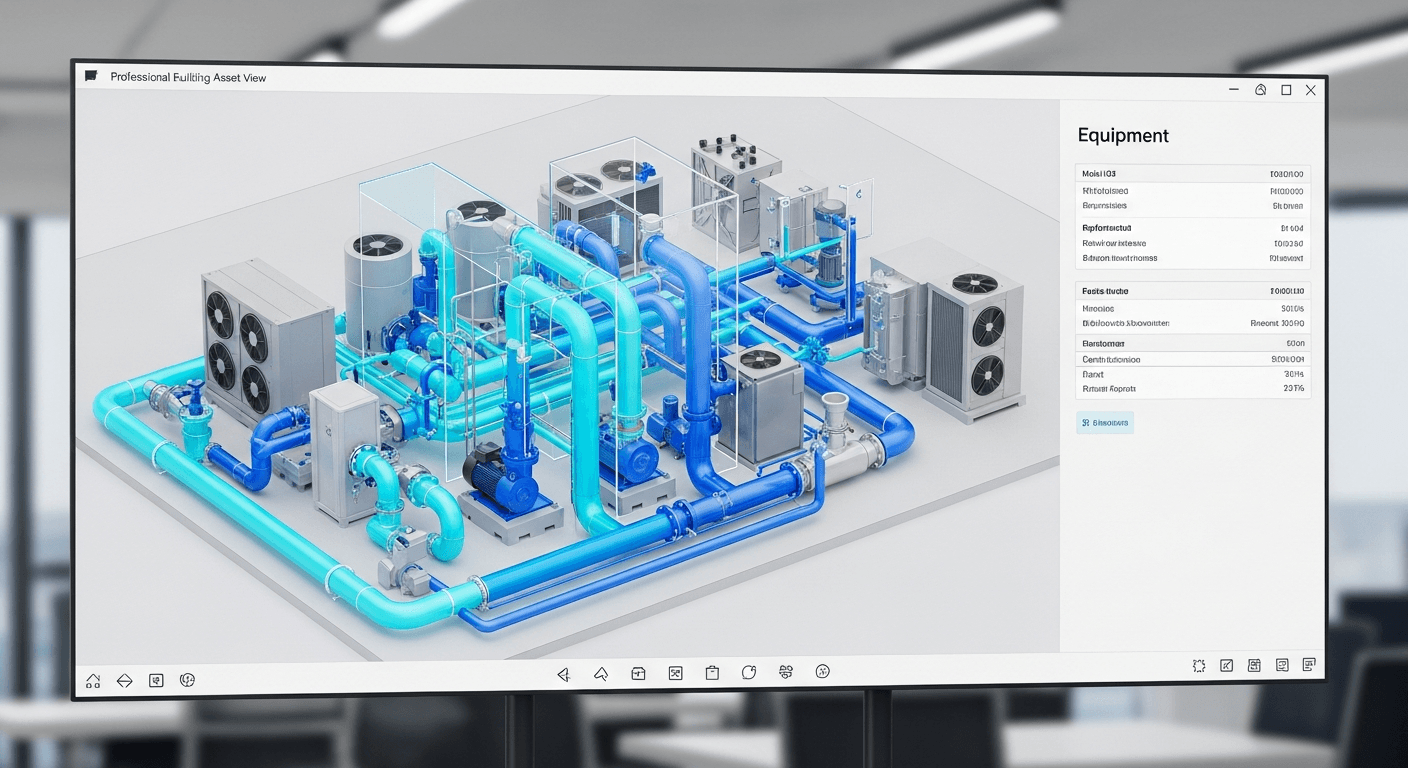
IoT+AI+3D: Industrial Software Was Built Around Dashboards – But Now It's Changed
The era of staring at 2D spreadsheets to manage complex physical infrastructure is over. By converging IoT, AI, and 3D visualization, industrial software is finally catching up to the complexity of the real world, enabling a new paradigm of 'Operational Presence' where digital twins empower autonomous decision-making.
Industrial Software Was Built Around Dashboards – But Now It's Changed
For decades, the backbone of industrial operations has been the humble dashboard. From the control rooms of power plants to the monitoring screens of manufacturing floors, we have trained generations of engineers to translate flat, 2D data into complex, 3D mental models. The interface was a grid of numbers, a line chart, or a heat map—a digital abstraction of a physical reality.
But the physical world is not a spreadsheet. It is a complex, spatial, and dynamic environment. As we enter the era of Industry 4.0, the limitations of dashboard-centric architectures are becoming glaringly obvious. The convergence of the Internet of Things (IoT), Artificial Intelligence (AI), and immersive 3D technology is rendering the old paradigm obsolete.
We are witnessing a fundamental shift in how humans interact with machines. It is no longer about monitoring data; it is about inhabiting the data. This article explores the architectural evolution of industrial software, moving from passive observation to active, spatial "Operational Presence."
The Limitations of the "Dashboard Era"
To understand where we are going, we must first understand the constraints of the past. Traditional industrial software was designed around the limitations of hardware, not the needs of the user. In the early days of industrial computing, processing power was scarce, and graphics were rudimentary. Consequently, software architects prioritized raw data throughput over user experience.
The result? The "HMI" (Human-Machine Interface) became a wall of text.
The Cognitive Disconnect
The primary issue with dashboard-based architecture is the cognitive load it places on the operator. When a sensor detects a temperature spike in a specific pipe within a sprawling refinery, the traditional dashboard flashes a red code on a screen. The operator must then:
- Read the code.
- Recall or look up the physical location of that specific sensor ID.
- mentally map that 2D location onto a 3D facility.
- Decide on a course of action.
This process involves significant mental translation. In an emergency, seconds lost to translation can result in catastrophic downtime or safety risks. The dashboard creates a layer of separation between the human and the machine. It treats data as an abstract concept rather than a physical property.
The Scalability Trap
Furthermore, dashboard architectures struggle to scale. As Industrial IoT (IIoT) deployments mature, the volume of telemetry data explodes. You cannot simply add more columns to a spreadsheet or more lines to a chart and expect the operator to absorb the information effectively. When you have 10,000 sensors streaming data simultaneously, a dashboard becomes a chaotic wall of noise. It lacks the hierarchy and spatial context necessary to filter signal from noise.
The New Trinity: IoT, AI, and 3D
The shift away from dashboards is driven by three distinct technological pillars that, when combined, create a synergy greater than the sum of their parts. This is not just an upgrade; it is an architectural overhaul.
1. IoT as the Nervous System
In the new model, IoT acts as the sensory nervous system of the digital twin. However, the role of IoT has evolved. It is no longer just about collection; it is about contextual telemetry. Modern IoT architecture focuses on high-fidelity, time-series data streaming that preserves the spatial relationship of the sensor.
A sensor on a turbine blade is not just an ID generating data; it is a coordinate in 3D space transmitting the physiological pulse of that asset. This requires edge computing architectures that can preprocess data before it hits the cloud, ensuring that the spatial integrity of the data remains intact.
2. AI as the Operational Brain
If IoT provides the senses, AI provides the perception. In the dashboard era, humans were the analytical engine. We looked at the data and found patterns. Today, AI algorithms (Machine Learning and Deep Learning) act as the first line of analysis.
AI changes the workflow from "detect and diagnose" to "predict and prescribe." Instead of an operator seeing a pressure drop and wondering why, an AI model has already correlated that drop with vibration data, historical maintenance records, and ambient temperature to predict a bearing failure in 48 hours.
Crucially, AI enables automation. It manages the complexity that human operators cannot. By filtering billions of data points, AI ensures that only high-value, actionable insights reach the user interface.
3. 3D as the Contextual Interface
This is the most visible change. 3D technology, powered by game-engine architectures (like Unity or Unreal), replaces the 2D grid. But it is not just "pretty graphics." It is Spatial Context.
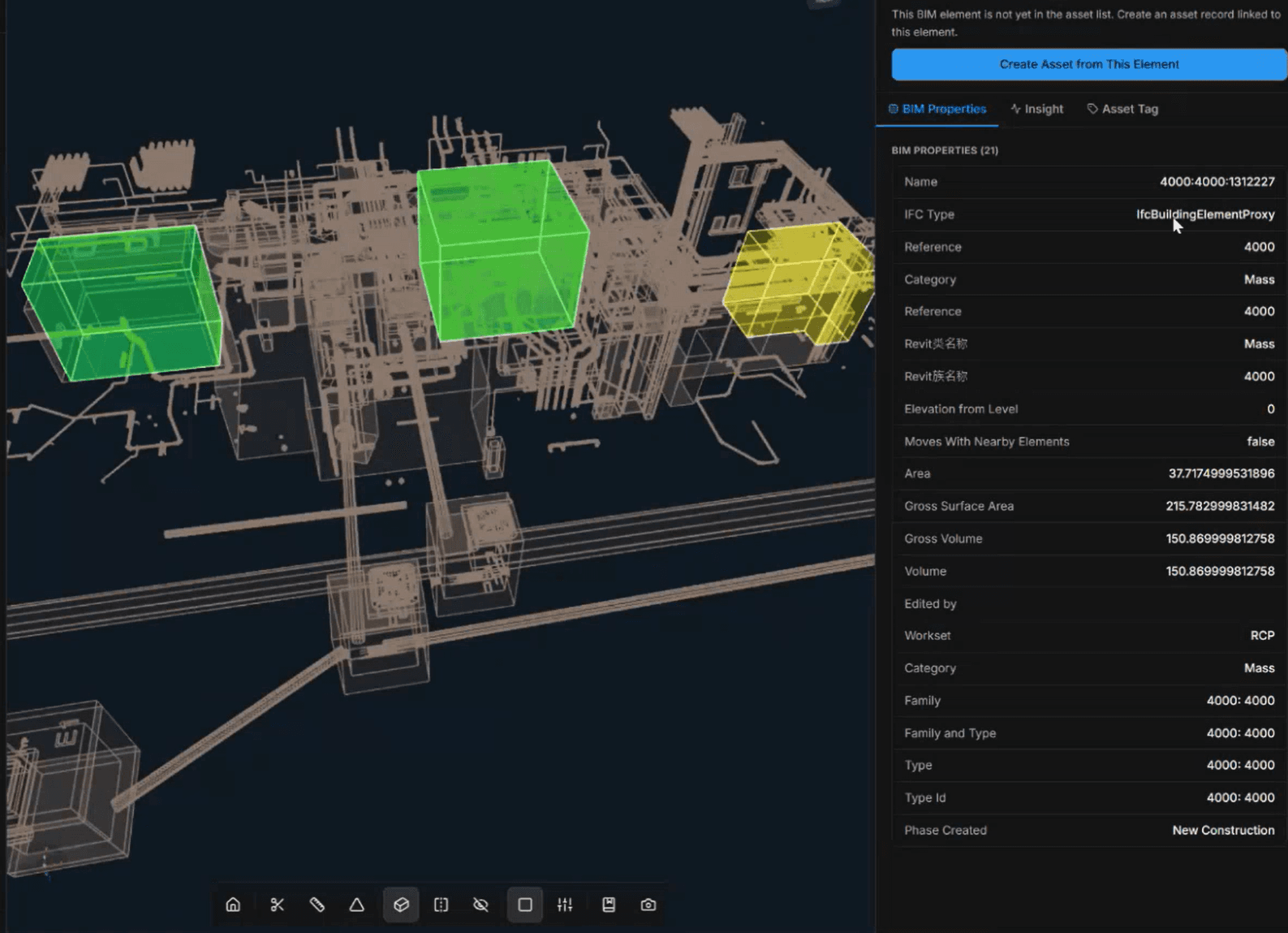
In a 3D digital twin, data is anchored to geometry. That temperature spike isn't a number on a screen; it is a color gradient changing on a specific pipe in a 3D model of the factory. The operator sees the problem in situ. They can zoom in, rotate around the asset, and peel back layers to see internal components.
This utilizes our innate human ability to understand spatial relationships. We process visual scenes much faster than tabular data. By aligning the digital representation with the physical reality, 3D interfaces eliminate the translation layer that slows down decision-making.
Architecture Patterns: The Move to "Operational Presence"
How do we actually build this? The underlying software architecture is moving from a "Request-Response" model (typical of web dashboards) to a "State Synchronization" model typical of multiplayer games and military simulations.
This new concept, often called Operational Presence, implies that the digital twin is not a static report; it is a living, breathing simulation of the physical asset.
State Synchronization vs. Polling
The Old Way (Polling): Your browser asks the server, "What is the temperature?" The server checks the database and replies. This happens every few seconds. It is choppy and resource-intensive.
The New Way (State Synchronization): The digital twin maintains a constant connection (via WebSockets or similar protocols). When the physical temperature changes, the digital state updates instantly across all clients. If an engineer in London rotates a valve in the digital twin, an engineer in New York sees that valve turn in real-time. This creates a shared, persistent reality.
The "Physically Based" Digital Twin
Advanced architecture patterns now use Physically Based Rendering (PBR) and physically accurate data modeling. This means the digital twin behaves according to the laws of physics. If you open a valve in the software, the pressure drops in the simulation exactly as it would in reality, governed by fluid dynamics algorithms, not just a hard-coded animation.
This allows for "what-if" scenario modeling. Operators can simulate a maintenance procedure in the 3D environment, watched over by AI safety checkers, before touching the actual physical machinery.
Practical Implications: Why This Matters
The convergence of these technologies is not just theoretical; it has tangible impacts on the bottom line of industrial operations.
1. Enhanced Remote Operations
In a post-pandemic world, the ability to manage assets remotely is paramount. With 3D interfaces and AR (Augmented Reality) integration, a technician can look at a physical piece of equipment through a tablet or smart glasses. The 3D digital twin is overlaid on the real world, showing real-time telemetry, hidden heat sources, or highlighting the specific bolt that needs tightening. The dashboard is dead; the interface is now the world itself.
2. Reducing Training Time
Training a new operator on a complex facility using 2D P&ID (Piping and Instrumentation Diagrams) takes months. Training them in an interactive 3D digital twin, where they can virtually "walk" the plant floor, takes days. The retention rate is higher because the learning is experiential rather than abstract.
3. From Reactive to Proactive Maintenance
n By combining IoT telemetry with AI analytics within a 3D context, maintenance transforms. Instead of replacing parts on a schedule (preventive) or after they break (reactive), the system predicts failure based on behavior anomalies. The 3D interface then guides the maintenance crew directly to the affected component, with the AI already generating the work order and procedure.
Case Study: The Smart Warehouse
Consider a modern automated fulfillment center. In the past, managers monitored efficiency via dashboards showing robot battery levels and package counts.
With the new architecture:
- Digital Twin: The entire warehouse is modeled in 3D.
- IoT Integration: Thousands of sensors track robot position, package weight, and local battery voltage.
- AI Analytics: The system notices Robot #4 is taking 0.5 seconds longer to turn left than usual.
- 3D Visualization: The 3D model highlights Robot #4 in yellow. The manager zooms in to see the robot's wheel is generating more friction heat than the others.
No dashboard reading was required to diagnose the issue. The spatial presentation of the data made the problem obvious immediately.
Overcoming the Challenges of Adoption
Despite the benefits, the transition faces hurdles. Legacy infrastructure is heavy with "data silos," where critical information is trapped in incompatible systems. Furthermore, creating high-fidelity 3D content has historically been expensive and time-consuming.
However, the industry is solving this through:
- Procedural Generation: Using algorithms to automatically build 3D models from 2D engineering files (CAD/PDF).
- Low-Code Platforms: Allowing engineers to assemble logic flows without deep coding knowledge.
- Cloud-Native Scalability: Leveraging the cloud to render the heavy 3D graphics, streaming them to low-cost devices (like laptops or tablets) just like a Netflix movie.
The Future: Autonomous Operations
Ultimately, the disappearance of the dashboard is the precursor to the autonomous factory. As software becomes better at modeling the world in 3D and predicting outcomes with AI, the human role shifts from "operator" to "supervisor."
We are moving toward a "Dark Factory" concept—where lights are not needed because humans are not required for the daily operation. The digital twin runs the simulation, the AI executes the decisions, and the IoT sensors verify the results. The dashboard served its purpose, but the future of industrial software is built on presence, simulation, and intelligence.
Frequently Asked Questions
1. What is a Digital Twin in industrial IoT? A digital twin is a virtual replica of a physical entity, system, or process. In IIoT, it acts as a bridge between the physical and digital worlds, allowing real-time data from sensors (IoT) to be used for visualization, simulation, and analysis.
2. How does AI improve industrial software beyond traditional analytics? Traditional analytics rely on humans interpreting data. AI in industrial software uses machine learning to automatically detect anomalies, predict equipment failures before they happen, and optimize operational parameters without human intervention, significantly reducing cognitive load on operators.
3. Why are 3D interfaces better than 2D dashboards? 3D interfaces utilize spatial context. Instead of reading a sensor ID and looking up its location, 3D interfaces visualize the data directly on the equipment model. This leverages human spatial reasoning, allowing for faster comprehension and faster reaction times, especially in complex facilities.
4. What is "Operational Presence"? Operational Presence refers to a state of remote management where the user feels as though they are physically present at the site. It is achieved through the combination of high-fidelity 3D environments, real-time state synchronization, and immersive telemetry data.
5. Can existing legacy systems support this new architecture? Yes, through middleware and "connector" architectures. Legacy systems can feed data into modern digital twin platforms. The challenge is often breaking down data silos so that the 3D twin can access a unified view of the facility's data.
6. Is expensive hardware required to view 3D industrial twins? Not necessarily. Modern architectures use cloud streaming (pixel streaming) where the heavy 3D rendering is done on a cloud server. The user only needs a standard web browser or a lightweight tablet to view and interact with the complex 3D scene.
7. How does this change impact safety in industrial environments? It significantly improves safety by enabling "Virtual Walkthroughs." Engineers can inspect hazardous areas remotely without exposure to danger. Additionally, AR (Augmented Reality) can overlay safety warnings and procedural instructions directly onto the worker's field of view, reducing human error.